
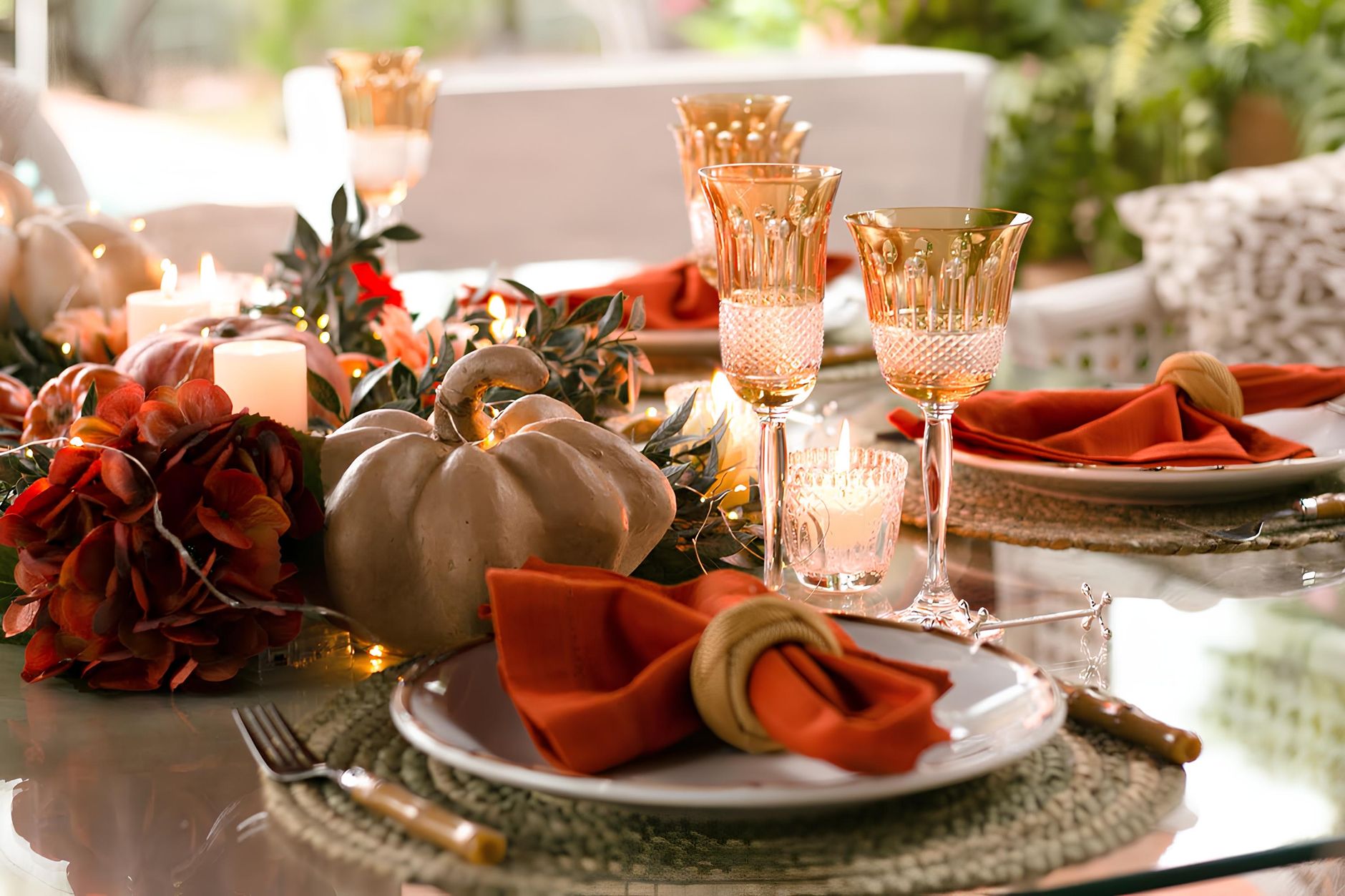
October is when Eugene stops pretending it is summer. The evenings come early, the rain shows up with a straight face, and a lot of us start thinking about inviting people over for a long dinner with candles, a pot of something warm, and a table that looks like we planned it. (We did not, but we will let you take the credit.)
We are a florist, so the flowers are the part we know best. But a dinner party is more than the table, and a good question always comes up a few days before: what do I wear? So this is a longer guide than usual. It covers the table, the hosting plan, and then a full section on dressing for the evening, from jeans and a good sweater to a suit or a cocktail dress, for men and for women. We are not stylists, and we will say so where we are giving opinions. But we know what dinner parties look like from the florist’s side of the doorway.
If you want the restaurant-side version of an evening out, our food-and-flower pairing guide is the companion to this one. For the big November table, see our Thanksgiving table guide.
📑 What Is in This Guide
- Part 1: The table and the flowers
- Part 2: The host’s countdown
- Part 3: What to bring as a guest
- Part 4: What to wear, and the dress-code decoder
- Part 5: Men: casual to formal, blazers, shoes, and the ascot question
- Part 6: Women: dresses, skirts, slacks, and a practical guide to tights and pantyhose
- Part 7: Wearing a flower, and matching the table
- Part 8: The short version
🍽️ Part 1: The Table and the Flowers
A dinner-party table has a few firm rules, and most of them come down to the flowers should not get in the way of the evening.
- Keep it low or keep it tall and thin. Guests have to see each other. Under about ten inches, or well above eye level on a slim stem or a branch, works. The middle ground, a big round arrangement at head height, is the one that blocks every conversation.
- Go easy on fragrance. Dinner already smells like dinner. Skip the hyacinth, stock, and heavy lilies near the food, and save them for the entry. Our guides to the least fragrant flowers and the most fragrant show which is which.
- Think in small vessels. Three or five little vases down the table, each with a few stems, are easier to move than one big centerpiece, and they leave space for the serving dishes. See our guide to the art of the vase.
- Mind the candles. Keep flames away from dried grasses, wheat, and dry leaves, and keep them from tipping into a branch.
What is in season. The Willamette Valley holds on to some color late. Dahlias keep going until a hard frost arrives (our guide to dahlia season explains the timing), and the reliable fall workhorses are chrysanthemums (see our mum guide), roses in burgundy, apricot, and cream, alstroemeria, berries, and seeded eucalyptus or branches. Availability changes week to week, so tell us the look you want and we will choose the best of what is in.
Three looks that work:
- The harvest table. Rust, gold, and burgundy flowers with berries and branches, in low copper or wooden bowls, with a few small pumpkins or gourds.
- The moody dinner. Deep plum, wine, and dark foliage in a dim room with plenty of candles. Our dark-bloom ideas are not just for Halloween.
- The cozy Eugene supper. A simple mixed bunch in jars and bottles, down the middle of a wooden table. No fuss, no rules.
⏰ Part 2: The Host’s Countdown
- One to two weeks ahead: Settle the guest list, the menu, and the look. If you want flowers from us, now is a good time to tell us the colors and the date.
- The weekend before: Check that you have vases, jars, and a clean table. Decide where coats and wet umbrellas will go. In a Eugene fall, that is a real question.
- Two days ahead: Flowers arrive or you pick them up. Trim the stems, strip the lower leaves, and put them in clean water in a cool spot. Our pro tips have the details.
- The day before: Shop, prep, and set the table, minus the food and the candles.
- The morning of: Arrange the flowers in their vessels and put them on the table. Wipe the vases.
- An hour before: Light the candles, dim the lights, and put on the music. Then change your clothes, which is what the rest of this guide is about.
If it is pouring, which it may be, our post on the real Eugene weather explains why the rainy season is not bad for flowers, and flowers on a rainy night are one of the nicest things a house can have.
🎁 Part 3: What to Bring as a Guest
The best host gift is one the host does not have to deal with. Flowers should come already in a vase, or be sent the day before, so nobody is hunting for a container while the sauce is on the stove. A small arrangement is better than a huge one, because the table is already spoken for. Our guide to gift ideas beyond flowers covers the rest. And if you are thanking a host after the evening, see our thank-you flowers page. We deliver across Eugene, Springfield, and Lane County.
👔 Part 4: What to Wear, and the Dress-Code Decoder
The first thing to know is that an invitation is a clue, not a rule. Wording like “casual,” “dressy,” or “cocktail” means different things in different crowds, and Eugene runs on the casual side of most scales. A rough decoder:
- Casual / “come as you are.” Clean jeans or comfortable pants, a nice top or sweater, shoes that are not sneakers you have gardened in. It is still an evening, so upgrade by one notch from your daytime clothes.
- Smart casual. Dark jeans or chinos, or a skirt or slacks. A collared shirt, a good knit, or a nice blouse. A blazer or cardigan is welcome.
- Business casual / “dressy casual.” Tailored trousers or a skirt, a button-up or blouse, and a blazer or a polished sweater. A dress is fine for anyone who wants one.
- Cocktail / semi-formal. A suit or a blazer and dress trousers for men, usually with a tie or a good alternative. A knee-length or midi dress, or an elegant separates outfit, for women.
- Formal. A dark suit or tuxedo, and a floor-length or elegant evening dress. Rare for a home dinner, but weddings and galas exist.
If the invitation does not say, ask the host. Nobody has ever been annoyed by “how dressy is this?” And if you are unsure, a safe rule is to dress one step above the room. Being a little overdressed in a blazer is easier to fix than being underdressed in a hoodie. You can always take the jacket off.
Three universal tips for a Eugene fall:
- Layer. The house may be warm, the walk from the car may not be. Easy-to-remove layers beat a single heavy piece.
- Plan for the rain. Shoes that can handle a wet sidewalk, a coat you can leave by the door, and a small umbrella. Slippery soles on a wet porch are a real thing.
- Check the shoes-off question. Many Pacific Northwest homes are shoes-off. If so, wear socks, tights, or hosiery you are happy to show, and avoid anything with a hole.
🧔 Part 5: Men: Casual to Formal
Casual. A flannel or a heavyweight cotton shirt, a henley, or a crew-neck sweater, with dark jeans or chinos and clean boots or leather sneakers. Skip the logo T-shirt and the athletic shorts. In fall, textures do the work: wool, corduroy, flannel, and denim all look right.
Smart casual. An oxford or a button-down, with a knit over it, or a fine merino sweater over a collared shirt. Chinos, wool trousers, or dark jeans with no rips. Brown or black leather boots, loafers, or Chelsea boots. A watch and a belt that matches your shoes round it out.
Business casual with a blazer. This is the sweet spot for most fall dinners. A few ideas:
- An unstructured blazer in navy, charcoal, or a seasonal texture such as tweed, herringbone, or corduroy. Softer shoulders look relaxed and still polished.
- A shirt that fits. More than any brand, fit matters: the collar should lie flat, the shoulder seam should sit at the edge of the shoulder, and the sleeves should end at the wrist bone.
- Tie optional. At a home dinner, an open collar under a blazer is usually fine. If you want a bit more, a knit tie in a fall color is a good choice.
- A pocket square, if you like. A simple fold, not a stiff, matching set.
Cocktail or semi-formal. A suit in navy, charcoal, or a deep fall color, a white or light-blue dress shirt, a tie or alternative, and leather lace-ups or polished boots. Match your belt and shoes, and keep the socks long enough that no bare leg shows when you sit. A dark knit tie is a nice fall touch.
Formal. A tuxedo or a very dark suit, a crisp white shirt, a bow tie or a black tie, and polished black shoes. If the invitation says black tie, wear black tie.
The ascot question. You asked, so here is the honest answer: sort of, and only for some men. A number of menswear shops and style commentators say the ascot, the day cravat, and the neckerchief are enjoying a revival, particularly among younger men who like a bit of flair. We would treat that with a grain of salt, because much of the loudest talk comes from the people who sell them. Our view as a florist who has seen a lot of lapels: an ascot is an accent, not a uniform. If you try one:
- Wear it with confidence or not at all. It looks best on someone who is clearly comfortable in it.
- Choose silk or a silk blend in a fall color, such as burgundy, forest green, rust, or navy, with a quiet pattern.
- Wear it open-collared. Tuck it into an open shirt collar, under a blazer, for a relaxed look. It is not a substitute for a tie at a black-tie event.
- Tie it yourself. A pre-tied one tends to look like a costume.
- Know your crowd. At a casual Eugene supper, it may draw a comment. At a gallery opening or a dressy dinner, it may draw a compliment. Either way, it will start a conversation.
👗 Part 6: Women: Dresses, Skirts, Slacks, and Tights
Casual. A good sweater with dark jeans or soft trousers, and boots or flats. A midi skirt with a knit and boots also looks right on a cool night. Add one thing that feels like an evening, such as earrings, a scarf, or a nicer coat.
Smart casual and business casual. Tailored slacks with a blouse, a fine knit, or a silk shell, and a blazer or cardigan on top. A wrap dress, a shirt dress, or a knit dress all work well. Loafers, ankle boots, or low heels suit most dinners.
Cocktail or semi-formal. A knee-length or midi dress in a fall fabric: velvet, crepe, satin, or a fine knit. Jewel tones, such as burgundy, emerald, navy, and plum, suit the season, as do deep neutrals. A tailored jumpsuit or an elegant skirt and top also fit the code. Add a wrap or a blazer for the walk from the car.
Formal. A floor-length or elegant evening dress, with a coat or wrap. Fall allows richer, heavier fabrics than summer does.
🧦 The Tights and Pantyhose Guide
This is the part everyone wonders about and few articles explain, so here it is in plain language.
Tights or pantyhose? Both cover the legs from the waist down. Pantyhose are traditionally sheer and designed to look like bare skin. Tights are usually thicker and meant to be seen, in colors and textures. Today the words are often used for each other, so check the product description rather than the name.
Understanding denier. Denier is a measure of how thick the yarn is, and it is the quickest way to tell what you are buying. As a rough guide:
- Sheer (about 8 to 20 denier): Barely there. A smooth, polished look for dressier evenings and warmer days. Not much warmth.
- Semi-opaque (about 30 to 40 denier): A soft, slightly matte look with a little warmth. A good all-around fall choice.
- Opaque (about 50 denier and up): Solid color, and noticeably warmer. Great for boots and skirts in cold weather.
With dresses and skirts.
- For a dressy evening, sheer or semi-sheer in black, a skin tone, or a deep neutral looks the most polished.
- For a casual or boots look, opaque tights in black, charcoal, navy, or brown are warm and easy.
- Match the color to the outfit. Matching your tights to your shoes makes the legs look longer. Matching them to the hem of the dress does something similar.
- Statement tights. Fashion roundups for the season have been talking up textured and patterned hosiery. If you like it, keep the rest of the outfit simple and let the tights be the one detail.
Under slacks, for warmth. You asked about this, and yes, plenty of people do it. It is a practical way to stay warm on a cold, wet walk from the car, and it is not a fashion crime. A few tips:
- Pick a thin, smooth pair. Fine or semi-opaque tights, or lightweight thermal tights, slide under trousers without bunching. Heavy tights can make the legs of fitted pants uncomfortable.
- Match the color to your shoes or socks so no contrast shows at the ankle if your trousers ride up when you sit.
- Choose trousers with room. Straight or wide-leg slacks work better than skinny ones over tights.
- Consider the fabric of the slacks. A lined pair slips on more easily than an unlined one, which can cling.
- Have a plan for the warm house. A host’s heated dining room, plus tights and a wool trouser, can get toasty. Wear layers on top that you can shed.
- Think about the exit. If you plan to take off a layer in the bathroom, choose a style that is easy to manage.
Care and fit tips.
- Size by height and weight, using the chart on the package. Too small is uncomfortable and sheer; too large sags at the knees and ankles.
- Put them on carefully. Smooth nails and dry hands help prevent snags. Many people roll them down to the toe and ease them on.
- Keep a spare pair in the bag. A run can happen between the car and the door.
- Hand wash or use a mesh bag to make them last.
🌹 Part 7: Wearing a Flower, and Matching the Table
This is the florist’s corner, and it is a nice finishing touch for a dressier dinner:
- A boutonniere for a blazer or a suit. A single rose, a small spray, or a bit of seasonal greenery on the lapel. It is a classic and quietly confident detail.
- A small corsage or a flower pin for women. A wristlet or a pin on a jacket collar adds a bit of occasion without going full prom. Our guide to corsages, boutonnieres, and wristlets explains the options.
- Match the table. If the table is burgundy and gold, a rust or burgundy boutonniere ties it together. Tell us the host’s colors and we will build to them.
- A word of caution. Keep it small and low-scent, and not so large that it brushes a neighbor’s plate.
It is also a thoughtful gift for the hosts: a boutonniere for him and a small corsage for her, ready for their own party. And if you are a guest, a flower on your lapel is an easy conversation starter.
📝 Part 8: The Short Version
- The table: low or tall and thin, light on fragrance, in small vessels, with seasonal color.
- The host: flowers two days ahead, table the day before, candles an hour before.
- The guest: bring flowers already in a vase, or send them ahead.
- The outfit: decode the invitation, dress one step above the room, layer, and plan for rain.
- For him: a well-fitted shirt and an unstructured blazer go a long way. An ascot is an accent, not a requirement.
- For her: choose tights by denier, and know that a thin pair under slacks is a perfectly good way to stay warm.
- Everyone: a flower on the lapel is a small, elegant finishing touch.
We are florists, not a fashion authority, so take the clothing advice as friendly opinion, and trust your host and your own comfort above anything we say. The flowers, on the other hand, we have strong feelings about.