Somewhere in Eugene right now, a dahlia is blooming with the confidence of a flower that has never heard of October. It is about to be educated. By the long-term averages, the first frost in Eugene lands around October 23, which is this Friday. (That date comes from the 1991–2020 climate normals as summarized by weathertotals.com. An average is not a promise: some years the frost arrives early, and some years the garden gets a reprieve into November.)
So today is the day to walk the garden with a bucket and a plan. A florist calls it the last bouquet before the frost. A gardener calls it a rescue mission. The flowers, we assume, call it rude.
❄️ What a Frost Actually Is
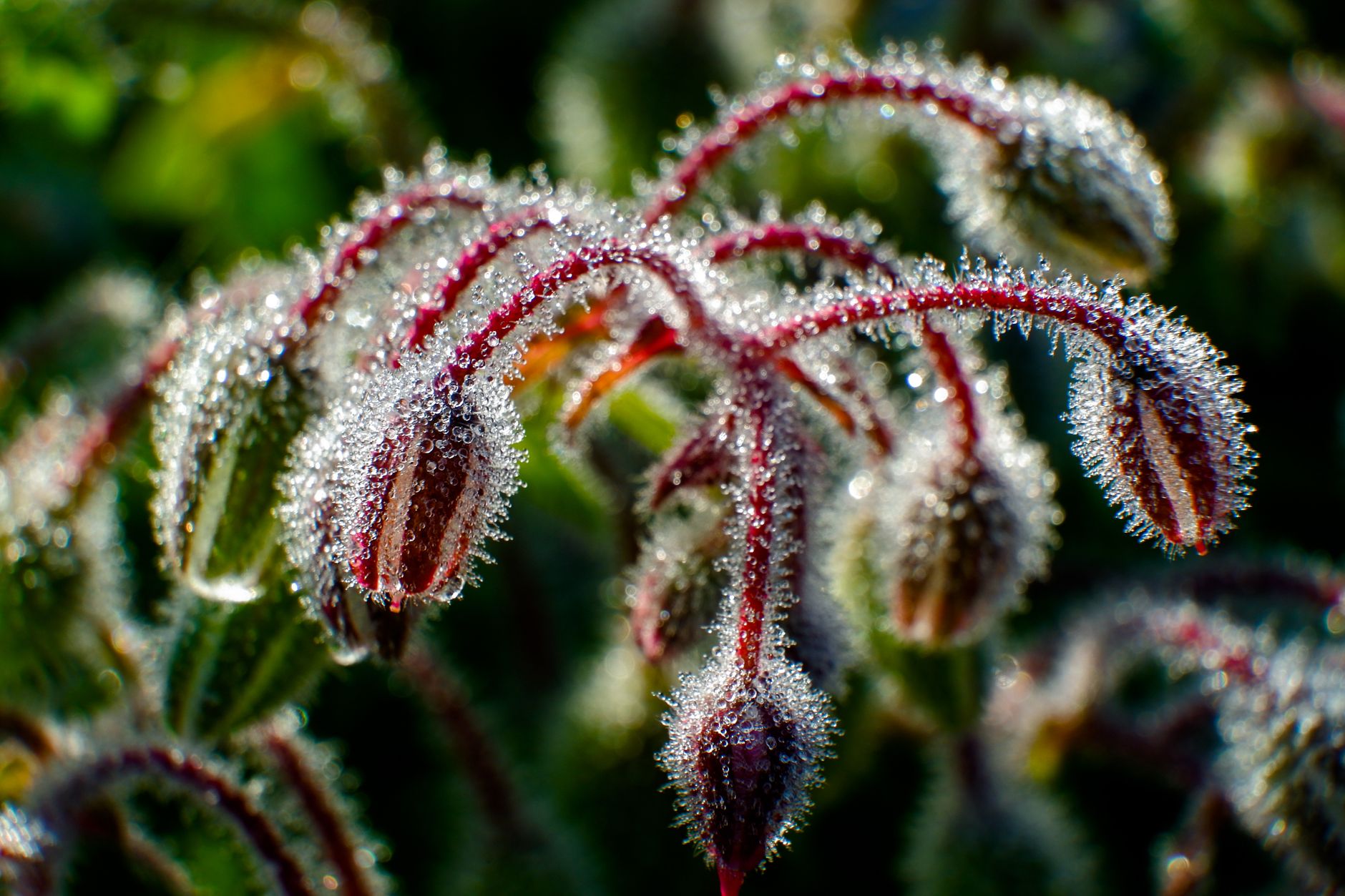
Frost does not need freezing air. On a clear, still night the ground gives its heat up to the sky and the coldest air settles low, so leaves at garden level can frost over while the thermometer on your porch still says 34 or 35. That is why forecasters tend to issue frost advisories for calm, clear nights in the mid-30s, and why a freeze warning, which means 32°F or lower, is the one that means business. A “hard freeze,” roughly 28°F or colder for several hours, finishes off nearly everything still green.
💀 Tonight’s Cast: The Tender and the Tough
Cut these first. They will not see Saturday.
- Dahlias — they bloom right up until the first frost, then turn brown and die back. Our Willamette Valley dahlia love letter was written for the opposite end of the year.
- Zinnias — highly sensitive, and they blacken after even a light frost. See our zinnia guide for what you will miss.
- Cosmos — a very brief dip may not hurt them, but they are not reliable, so cut.
- Basil — any that is still standing. It has never once won an argument with the cold.
Leave these. They have been through worse.
- Pansies and violas — famous for blooming straight through light frosts.
- Snapdragons — take a frost in stride, and in a mild climate like ours can even overwinter.
- Calendula — often one of the last flowers standing in the garden.
- Hardy garden mums — the garden kind, not the potted kind from the florist, which is why they keep going. Our mum guide explains the difference.
- Asters — they bloom late into fall and take a light frost without complaint.
This tough list is the reason a Willamette Valley garden can still have color in it well into November.
🧺 The Cutting Order
- Dahlias, zinnias, and cosmos first. Every bloom you leave is a bloom the frost gets.
- Cut dahlias that are already nearly fully open. As our dahlia guide explains, they barely open any more after cutting, and a tight bud just fades.
- Cut in the morning if you can, when stems are full of water, or at the very latest before dark.
- Strip the leaves below the waterline, cut at an angle, and put each stem into clean, cool water right away. The rest of the routine is in our pro tips for cut flowers.
- Leave the tough crowd alone. Pansies and snapdragons can take the night, and they will be back tomorrow.
🛏️ Or Buy the Garden a Blanket
If the forecast shows one frosty night followed by milder weather, you can sometimes buy tender plants a few more weeks. Drape a bedsheet, burlap, or garden row cover over them before sunset, all the way to the ground, and take it off in the morning. Plastic works in a pinch but should not touch the leaves. This is a one-night trick, not a winter plan, and a hard freeze will win.
🌱 The Dahlia Question
After the frost blackens the plants, you have a choice, and Oregon State University’s Extension dahlia guidance lays out both. Option one is to leave the tubers in the ground. Cut the stalks back to about 2 inches, cover the bed with 4- to 6-millimeter black plastic, and pile mulch on top. OSU notes that dahlias are more likely to die from too much moisture than from cold, so this only suits well-drained soil.
Option two is to dig them. Once a hard freeze has turned the plants brown, cut the stalks back to about 6 inches, dig the clumps, wash them, and let them dry for about a day. Do not leave them on bare concrete, which wicks moisture away. Divide the clumps, keep the tubers that have an eye, and store them in crates or boxes lined with newspaper, layered in vermiculite.
Either way, label them. Everyone believes they will remember which one was the pink one. Nobody does.
💐 The Frost-Night Bouquet
Build it from the garden’s last hour. One or two big dahlias are the stars of the evening. Add snapdragon spikes for height, hardy mums or asters for body, calendula for a warm orange note, and a branch or two of fall color for drama. Set it in a vase of cool water, change the water every couple of days, and keep it away from heaters and sunny windows. A bouquet made on the eve of a frost has a particular glow. It knows what you know.
🧡 No Garden? No Problem
If your garden is a windowsill, or the frost beat you to it, we can bring the end of the season to your table. Our arrangements are delivered across Eugene, Springfield, and Lane County, and they do not need a bedsheet.
📝 The Short Version
The average first frost is around October 23. Cut the dahlias, zinnias, and cosmos now, leave the pansies, snapdragons, calendula, mums, and asters, cover what you can for a night, and decide what to do with the dahlia tubers before they decide for you.