Flowers have a reputation for honesty. A rose is a rose, a daisy is a daisy, and nobody expects a bouquet to be running a con. But look closely at the plant world and you find some of the most committed frauds in nature: flowers that pretend to be insects, flowers that pretend to be a dead animal, and, in the flower shop itself, a few that pretend to be a color they never were.
This is a fun one. We are a florist, not a botanist, so we are keeping to what published sources say about each plant, and we have flagged where we are not sure. We have written before about flowers that break every rule and, just this week, about mushroom season. This is the next strange chapter: flowers that lie.
🐝 The Orchids That Impersonate Insects
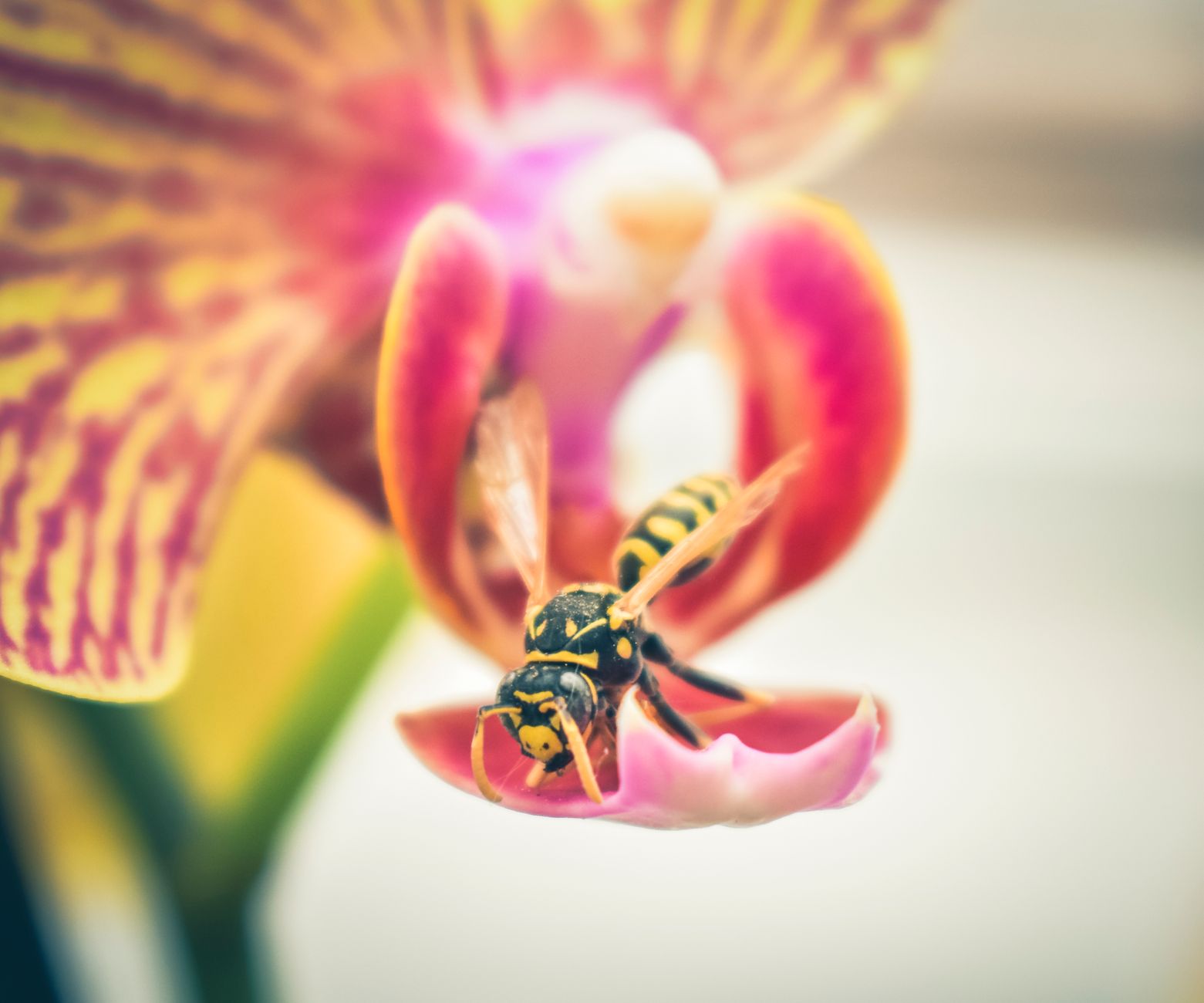
Many flowers pay their pollinators with nectar. Some orchids do not pay at all. Instead, they trick males of certain insect species into believing the flower is a female. The flower copies her shape, her texture, and, most importantly, her scent. The male lands, tries to mate with it, and in the process picks up a packet of pollen that he carries to the next flower. Biologists call this sexual deception, and the behavior is called pseudocopulation.
The best-known examples are in the genus Ophrys, which includes the bee orchid and the fly orchid. According to the Natural History Museum in London, the insect gets nothing out of the encounter but wasted effort, while the orchid sends off its pollen. Here is a detail we love: the same museum notes that bee orchids also pollinate themselves, so the elaborate trick is, in a sense, a backup plan, while the late spider orchid depends solely on deception, which is part of why it is a much rarer sight.
🔨 The Hammer Orchid, the Strangest of the Strange
If a con artist has a masterpiece, it is the hammer orchid (genus Drakaea), a group of ten species that, according to published botanical descriptions, grow only in the southwest of Western Australia. Its flower has a lip that resembles a female thynnid wasp in shape, color, and scent. Female thynnid wasps cannot fly. In the wasp’s own mating routine, a male finds a female by her scent and then carries her off to a food source.
The orchid exploits that routine. Its lip sits on a narrow, hinged stem. A male wasp grabs the “female” and tries to fly away with her, and the stem swings backward and presses him against the flower’s pollen. He eventually gives up, flies off with the pollen, and tries again with another orchid, which is when the pollen lands where it needs to. The accounts we read say each species of hammer orchid is pollinated by a specific species of wasp. That is a lot of engineering for a plant with a single small leaf.
🍖 The Flowers That Smell Like Death
Another popular scam is to smell like something dead. Flies and certain beetles are drawn to rotting meat, so a handful of plants have evolved to look and smell like it. Our San Carlos sister site has already toured the most famous of them, the corpse flower, in its guide to the weirdest flowers on Earth, so here are two other members of the carrion club:
- The dead horse arum (Helicodiceros muscivorus), native to Corsica, Sardinia, and the Balearic Islands. According to published descriptions, its flowers smell like rotting meat and attract blowflies, and the volatile compounds are similar to those found in real carrion. It can also raise its own temperature, which helps spread the smell. The accounts say its structure is shaped so that flies get temporarily trapped inside, which gives them time to cover themselves in pollen before they are released. (We would like to be very clear that this plant is not an arrangement, and we are not offering it.)
- Stapelia, a group of small, cactus-like succulents mostly native to South Africa, often called carrion flowers or starfish flowers. Their flowers are hairy and, according to the sources we checked, mimic rotting meat in both color and smell, which draws scavenging flies. They are also grown as potted plants in some places, which tells you something about how much people enjoy a conversation piece.
🧪 The Lies in the Cooler
Now for a different kind of fraud, the kind that happens after the flower is cut. A few colors in a flower shop are not what they seem:
- Blue roses. Roses do not naturally make a true blue pigment, and traditional breeding has produced lavender and mauve, not blue. Most “blue” roses sold as cut flowers are white roses that have been dyed. A genetically engineered rose marketed as blue does exist, but reports describe its color as closer to violet than sky blue.
- Rainbow roses. These are generally white roses whose stems are split so that each section drinks a different colored dye. It is a clever, hands-on trick, not a natural variety.
- “Black” flowers. As we noted in our Halloween flowers guide, what florists call black is usually a very deep burgundy or plum that reads as black in low light.
- Hydrangeas. Hydrangeas are a rare honest liar: their color can change with the soil, which we explain in our hydrangea guide. The same plant can be blue in one yard and pink in another.
None of this is a scandal. Tinted flowers are a long-standing part of the trade, and many people love them. But if a specific color matters to you, say you are matching a dress, a team, or a wedding palette, it is fair to ask whether the color is natural or tinted, because dyed flowers can behave differently in a vase and may mark fabric or a hand. Our guide to roses is a good companion.
🔍 Why Any of This Matters to a Bouquet
It is fun to know, and it also changes how you see a flower. Every shape, scent, and color on a bloom is, at some level, a message to a pollinator, and some of those messages are blatant lies. Even the humble daisy on your table is an advertisement. Our guide to pollinators and the flowers they love goes into the honest side of the story, and our guide to what flowers mean is the human version: the messages we send with them.
🎁 A Gift for the Person Who Loves a Con
Everyone knows someone who delights in this stuff: a gardener, a teacher, a nature nerd, a friend who watches too many documentaries. For them, a small arrangement with a card that says “I would never lie to you, but these flowers would” is a good bit. Our thank-you flowers page is a good place to start, and we deliver across Eugene, Springfield, and Lane County.
🧡 The Short Version
Some orchids pretend to be insects, some plants pretend to be a dead animal, and some roses pretend to be blue. Enjoy the story, ask about the color when it matters, and never trust a hammer orchid. The honest flowers, we promise, are still the majority.