
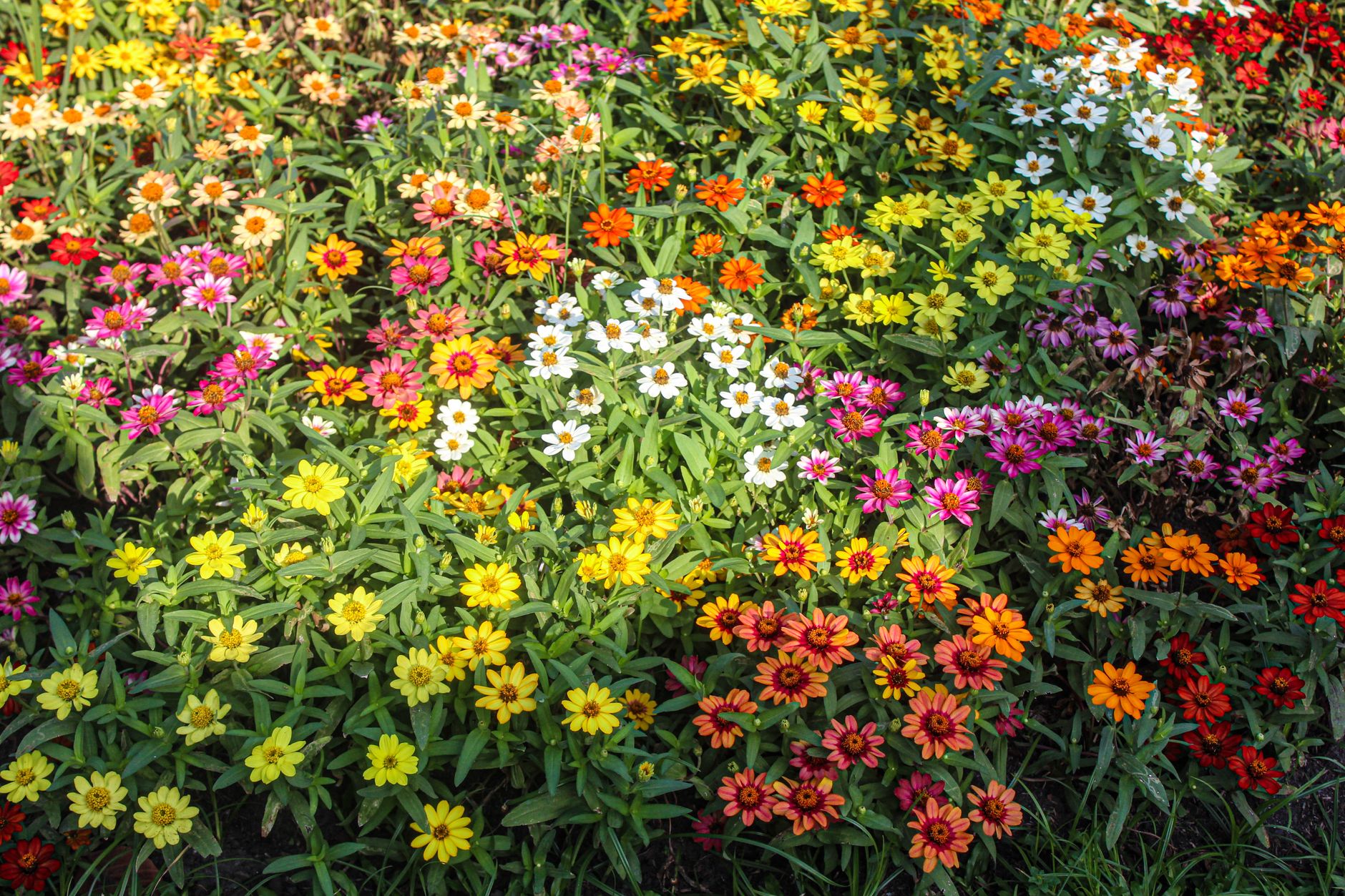
There is a flower blooming in cutting gardens and farm rows across Oregon and California right now that most people walk past without knowing its name. It is not glamorous the way a rose is. It does not have the fragrance of a lavender field or the drama of a dahlia. But ask any flower farmer or working florist to name the most generous, hardworking, wildly underrated flower of high summer, and a surprising number of them will say the same thing: the zinnia.
Zinnias are the flower that gives more the more you take. They bloom in colors that genuinely do not exist anywhere else in the flower world. They are at their absolute peak right now — July into August — and they are the reason so many local bouquets this time of year look like a fistful of pure summer. Here is everything you need to know about them.
🌼 What Exactly Is a Zinnia?
Zinnias (Zinnia elegans and its relatives) are native to the grasslands of Mexico and the American Southwest, which tells you almost everything about how they behave: they love heat, they shrug off drought, and they bloom their hearts out through the hottest, driest stretch of the year when a lot of other flowers are struggling. Spanish botanists sent them back to Europe in the 1700s, and the flower was named for Johann Gottfried Zinn, an 18th-century German botanist who studied them.
The early versions were, frankly, a little weedy and plain. Everything you love about the modern zinnia — the huge dahlia-like blooms, the impossible color range, the sturdy stems — is the result of two centuries of patient breeding. Today they are one of the most popular cut flowers grown in home gardens and small flower farms in America, and for good reason.
✂️ The “Cut-and-Come-Again” Superpower
Here is the single most important thing to understand about zinnias, and the reason florists and farmers are quietly obsessed with them: cutting a zinnia makes the plant produce more zinnias.
Most flowers, when you cut the bloom, are simply down one bloom. Zinnias work differently. They are what growers call “cut-and-come-again” flowers — every time you snip a stem, the plant responds by pushing out multiple new stems below the cut. A single zinnia plant, kept cut, can produce blooms continuously from midsummer straight through to the first hard frost. The more you harvest, the bushier and more productive the plant becomes.
This is why a modest row of zinnias on a small flower farm can supply bouquets all summer long, and why they are the classic “first flower” recommended to new cutting gardeners. They reward you for taking from them. There is something almost philosophical about it — a flower whose entire nature is to give more the moment you ask.
🌈 The Colors That Do Not Exist Anywhere Else
If you have ever stood in front of a bucket of mixed zinnias at a farm stand and felt slightly overwhelmed, that is the correct reaction. No other common cut flower covers this much of the color wheel:
- Every warm tone imaginable. Hot coral, burnt orange, deep scarlet, golden yellow, salmon, apricot, and a particular electric magenta that reads as almost neon in bright sun. These are the colors zinnias do better than anything else.
- Cool and unexpected shades. Soft lilac, dusty rose, clean white, and pale lime green (the beloved ‘Envy’ variety is genuinely chartreuse).
- The impossible ones. The ‘Queeny’ series produces muted, antique, almost color-shifting blooms — lime fading to peach, coral fading to rose, tones that look hand-painted and change as the flower ages. These have become wildly popular in wedding and editorial floral design.
- Bicolors and stripes. The ‘Candy Cane’ and ‘Peppermint’ types are splashed and streaked like nothing else in the garden.
The one color zinnias famously cannot do is true blue — a club almost no flower belongs to. Everything else? They cover it, often within a single packet of seed.
🌻 The Varieties Worth Knowing
When a florist talks about zinnias, they usually mean one of a few workhorse types:
- Benary’s Giant. The gold standard for cut flowers. Big, fully double, dahlia-like blooms on long, strong stems in a huge range of saturated colors. If you buy a bunch of zinnias from a flower farm, these are very likely what you are getting.
- Queeny series. The antique, muted, color-shifting blooms described above. Smaller than Benary’s Giant but prized for their sophisticated, unusual tones.
- Oklahoma series. Smaller flowers on very productive plants — excellent filler and spray material that keeps producing all season.
- Zinderella series. Unusual “scabiosa-flowered” blooms with a raised, fluffy crested center. A florist’s secret weapon for adding texture.
- Profusion and Zahara types. Low, spreading, disease-resistant landscape zinnias grown for garden color rather than cutting. Beautiful in the ground, too short for the vase.
💧 How to Make Cut Zinnias Last (This Part Matters)
Zinnias have a reputation for short vase life, and it is completely undeserved — it comes almost entirely from harvesting them at the wrong moment. Get this right and a zinnia will give you a week to ten days easily. A few florist rules:
- The wiggle test is everything. Zinnias do not continue to open after cutting, so they must be harvested fully mature. Grip the stem about eight inches down and gently wiggle it. If the stem is floppy and bends like a noodle, the flower is not ready. If it is stiff and holds straight, cut it. This one test is the difference between three-day zinnias and ten-day zinnias.
- They are “dirty” flowers. Zinnias foul their water faster than almost anything — the stems shed bacteria that clouds the vase and shortens life for everything in it. Change the water every day or two, and they will reward you.
- Strip the lower leaves. No foliage below the waterline. Zinnia leaves rot fast and accelerate the bacteria problem.
- Cut in the cool of the day. Early morning or evening, straight into clean water, and give them an hour to drink before arranging.
Follow those and zinnias are not a short-lived flower at all. Our full guide to keeping cut flowers fresh goes deeper on water, trimming, and placement — all of which zinnias respond to beautifully.
🏡 Why Florists Love Them in Arrangements
Zinnias occupy a specific and valuable role in a summer arrangement. Unlike lavender, which is mostly about fragrance and texture, the zinnia is pure, saturated color and cheer:
- They are the color anchor. A few hot-toned zinnias set the entire palette of a summer bouquet. Everything else arranges itself around them.
- They mix joyfully with other summer stems. Zinnias and sunflowers together are the definition of a July field bouquet — big, bright, unpretentious, and impossible to look at without smiling. Add some lavender for fragrance and you have summer in a jar.
- The round, flat face is a shape workhorse. In a mixed arrangement of spikes, sprays, and delicate blooms, the bold circular face of a zinnia gives the eye somewhere to rest. Designers call these “focal” flowers, and zinnias are focal flowers that cost a fraction of what a garden rose does.
- They read as local and seasonal. A zinnia in a bouquet is a signal that the flowers were grown nearby and cut recently. You almost never see zinnias in mass-market grocery bunches, because they do not ship well — which makes them a hallmark of genuinely local, seasonal flowers.
That last point is the quiet magic of the zinnia. Because they bruise and do not travel, they rarely survive the long international supply chain that brings roses and carnations to the supermarket. If there are zinnias in your bouquet, they were almost certainly grown within a short drive of where you are standing.
🐝 A Gift to the Garden, Too
Even if you never cut a single stem, zinnias earn their place. They are one of the best pollinator plants you can grow — butterflies in particular adore them, and a patch of zinnias in July hums with bees and flutters with swallowtails all day long. They are the crossover flower that belongs equally in the vase and the border, which is exactly why they turn up in our guide to flowers that attract pollinators.
They are also famously easy to grow from seed — direct-sown after the soil warms, they germinate in days and bloom in about two months, which is why they are the flower so many people plant with their kids. Few flowers offer this much reward for this little effort.
🌸 Why July Is Their Whole Moment
Zinnias need heat, and they need it sustained. That is why they hit their stride in the exact stretch of summer we are in right now. In the Willamette Valley and across Northern California, zinnias planted in late spring come into full production in July and keep going until the first frost knocks them back in October. Right now, the rows are at their fullest and the color is at its most intense.
This is the window. If you want a bouquet that could not have been made in April and will not be possible in November — a bouquet that is unmistakably, specifically right now — zinnias are how you say it. They are one of the clearest examples of why what is in season matters so much to how a bouquet looks and feels.
💭 The Bottom Line
The zinnia is the generous flower — the one that blooms harder the more you cut it, comes in colors no other flower can touch, feeds the butterflies, grows from a seed a child can plant, and puts pure summer on your table for a week or more if you treat it right. It will never be as famous as the rose. Ask a florist in July which flower they would actually want on their own kitchen table, though, and do not be surprised if the answer is a jar of mixed zinnias.
Browse our arrangements and mention zinnias in your order notes — while they are at peak, we will happily build something bright, local, and unmistakably July around them. This is their season, and it does not last. Let us put a handful of summer on someone’s table.