
The University of Oregon campus is one of the most beautiful college campuses in the Pacific Northwest in any season, but in spring it becomes something else entirely. The combination of mature trees, intentional plantings, mild Willamette Valley weather, and 130 years of accumulated landscaping means that from late March through May, the campus is a rolling flower show that most people walk right through without fully noticing.
And just uphill from campus, Hendricks Park — Eugene’s oldest city park — holds one of the finest public rhododendron collections in Oregon, surrounded by native forest, spring wildflowers, and the kind of beauty that makes people stop talking and just look.
At eugeneflorist.com, we deliver flowers to the UO campus regularly (we wrote a whole guide to campus delivery). But this article is about the flowers that are already there — the ones growing in the ground, blooming on the trees, and making April in Eugene feel like walking through a living arrangement.
🌸 The UO Campus: What to See and Where
The University of Oregon campus covers about 295 acres, and the landscaping is not accidental. The campus has been planted and tended for over a century, with mature specimens that predate most of the buildings. Spring is when that investment pays off most visibly.
Cherry blossoms on the Esplanade — The tree-lined walkway near Knight Library is one of the signature spring sights on campus. Ornamental cherry trees bloom in waves from late March through mid-April, creating a canopy of pink and white that is as photogenic as anything in Portland. Go in the morning when the light is soft and the petals are backlit. Bring your phone, but give yourself a minute before you start shooting.
Magnolias near Deady and Villard Halls — The oldest buildings on campus are surrounded by mature saucer magnolias that produce enormous pink-and-white blooms in March and early April. The contrast of the soft petals against the dark brick and old-growth trees is one of the most beautiful compositions on campus. These bloom early and drop fast — you have about two weeks to see them at their best.
The Pioneer Cemetery — Tucked into the east side of campus between the law school and Agate Street, the Pioneer Cemetery is a small, quiet historic burial ground shaded by towering conifers and mature deciduous trees. In spring, the understory produces native wildflowers, ferns, and early bloom in a setting that feels remarkably peaceful. It is one of the most overlooked beautiful spots on campus.
Faculty Glade and the courtyard spaces — The open lawns and tree-shaded glades between academic buildings support scattered ornamental plantings, flowering shrubs, and the kind of mature landscape that only exists on campuses old enough to have 80-year-old trees. Faculty Glade, between Fenton Hall and the Lillis Business Complex, is especially nice in April.
The EMU courtyard and surrounding areas — The Erb Memorial Union sits at the social center of campus, and the surrounding landscape includes flowering trees, ornamental beds, and a mix of evergreen and deciduous plantings that look best in the transition from early to mid-spring.
The Science complex and greenhouse area — The biology and environmental science buildings on the east side of campus include demonstration plantings and proximity to the campus greenhouse. The landscaping here tends toward native and ecologically interesting species rather than purely ornamental ones — worth a look if you like plants that have a story.
🌺 Hendricks Park: Eugene’s Crown Jewel
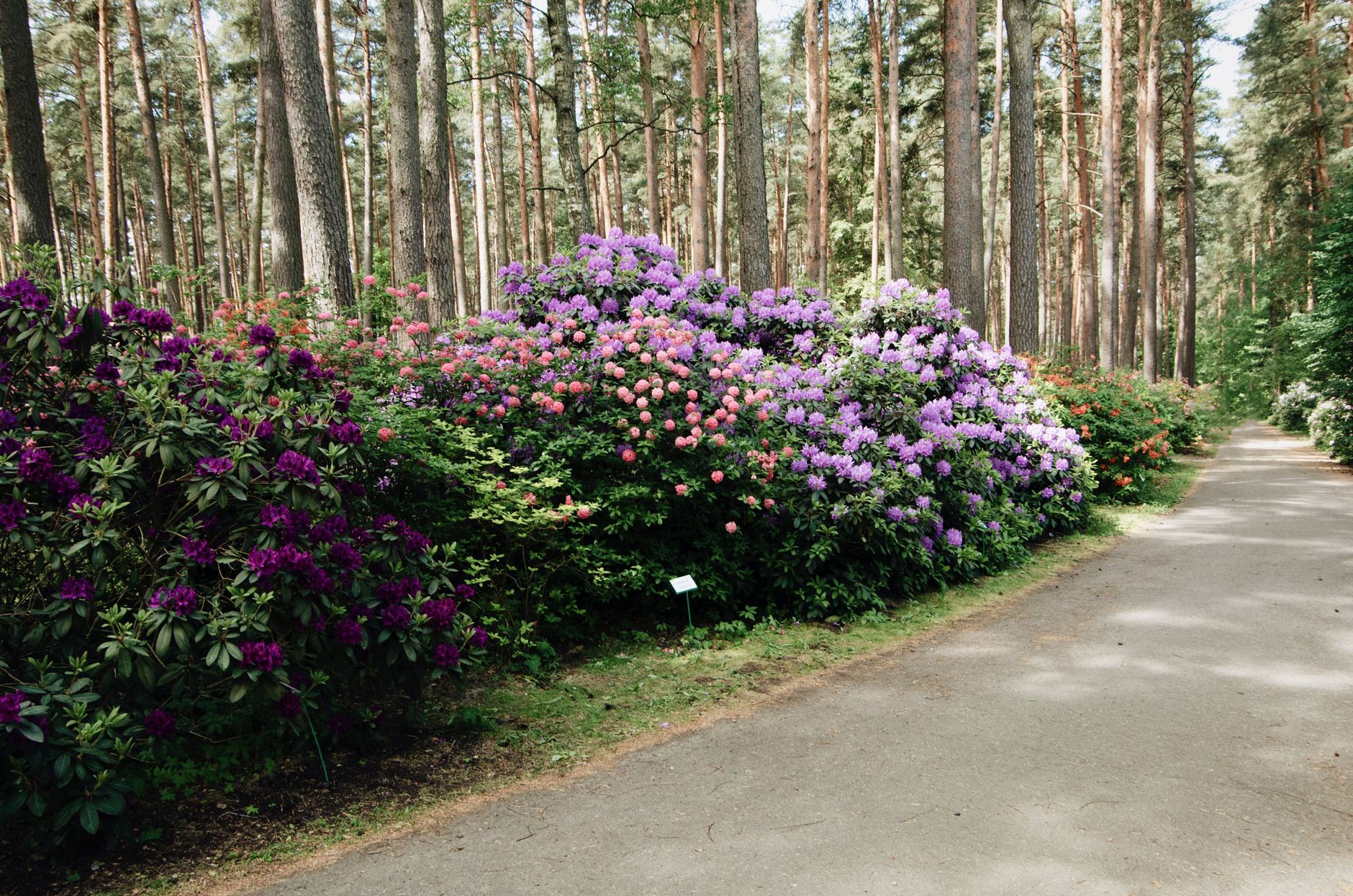
Hendricks Park is a 78-acre city park on the ridgeline above the UO campus, and its Rhododendron Garden is the reason people drive from across Oregon to visit Eugene in April and May. The garden was established in the 1950s and has been expanded and refined for decades. It now contains hundreds of rhododendron and azalea varieties planted under a towering Douglas fir canopy, creating a layered, shaded, cathedral-like space that is unlike any other public garden in the region.
What you will see at Hendricks Park in spring:
- rhododendrons — the main event, blooming in waves from early April through late May. Colors range from deep purple and magenta to soft pink, white, salmon, red, and orange. Peak bloom is typically mid-to-late April, but the staggered varieties mean something is always opening.
- azaleas — closely related to rhododendrons and interspersed throughout the garden. Some of the deciduous azaleas produce intensely fragrant blooms in coral, orange, and gold.
- native wildflowers — trillium, fawn lily, bleeding heart, and Oregon grape bloom in the understory around the rhododendron garden and along the forest trails. The native plant area in the upper park is especially good for these.
- camellias — earlier-blooming camellias provide color in March and early April before the rhododendrons hit their stride
- mature Douglas fir canopy — the towering conifers filter the light and create the shaded, cool, moist conditions that rhododendrons love. The trees are part of the garden, not just backdrop.
- ferns and mosses — the forest floor is a garden of its own, with sword fern, maidenhair fern, and moss-covered logs creating texture and green depth beneath the blooming shrubs
We mentioned Hendricks Park in our late-March bloom guide when the earliest rhododendrons were just starting. By mid-April the garden is in full voice. It is free, open daily, and one of the best things about living in Eugene.
🌿 The Native Plant Garden at Hendricks Park
Most visitors come to Hendricks Park for the rhododendrons and never make it to the Native Plant Garden in the upper section of the park. That is a mistake.
The native plant area is a curated collection of Willamette Valley and Pacific Northwest native species planted in naturalistic arrangements that show what the regional flora looks like when it is given space and attention. In spring, the native garden produces:
- camas — the iconic blue-purple bloom of the Willamette Valley, historically significant to the Kalapuya people
- western trillium — large white three-petaled flowers on the forest floor
- red-flowering currant — hanging clusters of pink-red flowers that attract hummingbirds
- Oregon grape — bright yellow flower clusters on the state flower of Oregon
- shooting stars, checker-mallow, and fawn lily — delicate native wildflowers that bloom in the meadow and edge areas
If you enjoyed our Willamette Valley wildflower guide, the Native Plant Garden at Hendricks Park is the most accessible place to see many of those same species without driving out of town.
🚶 The Walk from Campus to Hendricks Park
One of the best things about the relationship between the UO campus and Hendricks Park is that you can walk between them. The park sits on the hill directly above the east side of campus, accessible from several trailheads along Fairmount Boulevard and Summit Avenue.
A suggested walking route:
- Start on the UO campus Esplanade — enjoy the cherry blossoms and the magnolias near Deady Hall
- Walk east through campus past the Pioneer Cemetery toward Agate Street
- Head uphill on Fairmount Boulevard or the connecting paths through the South University neighborhood — the residential streets here have excellent mature gardens and flowering trees
- Enter Hendricks Park from the lower trailheads and walk up through the Rhododendron Garden
- Continue to the upper park for the Native Plant Garden and forest trails
- Loop back down through the park or along the residential streets to campus
The whole loop is about 2 to 3 miles depending on how you route it, with moderate elevation gain (the park is on a hill). It is one of the best urban flower walks in Oregon, and it is entirely within walking distance of the UO campus.
🌃 The Fairmount and South University Neighborhoods: The Blooming Bonus
The residential neighborhoods between the UO campus and Hendricks Park — Fairmount, South University, and College Hill — are some of the most beautiful residential streets in Eugene, and in spring they are spectacular. These are older, established neighborhoods with:
- mature rhododendrons and azaleas in front yards that rival the park collection
- flowering cherry and plum trees lining the streets
- wisteria, clematis, and climbing roses on fences and trellises
- deep, layered garden beds with bulbs, perennials, and shrubs that bloom in sequence from February through June
- heritage trees — oaks, maples, and conifers that have been growing for a century
Walking through these neighborhoods in April is like visiting a garden show where every house is an exhibitor and nobody charged admission. We featured this area in our neighborhood bouquets article — Fairmount was the “tidy English garden posy” and it earns the comparison.
💡 Tips for Getting the Most Out of the Walk
- Go in the morning. Light is softer, the park is less crowded, and the flowers look their best before afternoon heat (on warm days) or wind.
- April is peak. Late March is the early show. Mid-to-late April is when Hendricks Park, the campus cherries, and the neighborhood gardens all overlap at full bloom. Early May catches the late rhododendrons and the first roses.
- Bring layers. The park is shaded and cooler than the surrounding streets. Campus can be sunny and warm while Hendricks Park is still in morning chill.
- Take the neighborhood streets, not just the park trails. The residential gardens between campus and the park are half the experience.
- Talk to people. Eugene gardeners love talking about their gardens. A compliment about someone’s rhododendron can turn into a 15-minute tour and a friendship.
- Go more than once. The bloom changes week to week. What peaks this Saturday will be different from next Saturday. The campus cherries, the Hendricks rhododendrons, and the neighborhood gardens all run on slightly different schedules.
💐 When the Walk Makes You Want to Send Flowers
This happens. You are walking through a tunnel of rhododendrons at Hendricks Park, or standing under a cherry tree on the Esplanade, or passing a front yard in Fairmount that looks like it belongs in a magazine, and somewhere between the color and the fragrance and the spring air, someone comes to mind. A parent. A friend. A person you have been meaning to reach out to.
That instinct is worth following. You do not need to pick the rhododendrons (please do not). But you can absolutely send the feeling. A fresh arrangement delivered to someone’s door carries the same energy as a spring walk — color, life, warmth, and the message that someone was thinking of them.
At eugeneflorist.com, we deliver across Eugene, Springfield, and Lane County — same-day when you need it. The flowers we send are not rhododendrons or cherry blossoms (those do not last in a vase). But they carry the same spirit: something beautiful, given with care, because the moment called for it. 🌸🎓