
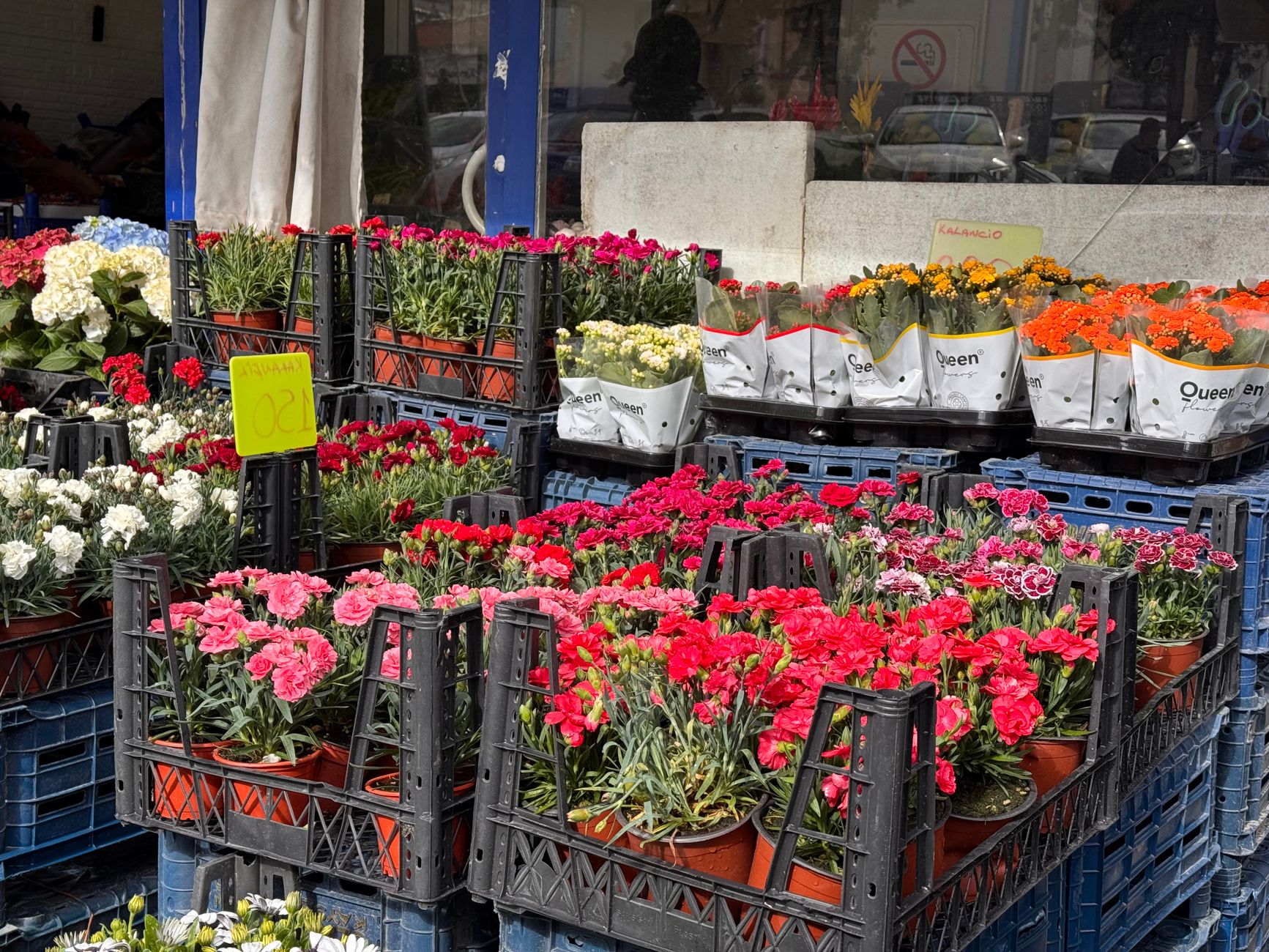
It is Sunday night. You are on the couch. Maybe a show is on. Maybe you are half-scrolling your phone, half-dreading Monday. The weekend is winding down and the house is quiet and tomorrow starts whether you are ready or not.
At the shop, someone is still here. The closed sign is up. The lights in front are off. But in the back — the part you never see — the week is already being built.
This is what happens on Sunday night at a flower shop. This is where your Monday morning flowers come from.
📋 The Wholesale Order
Every week starts with a decision: what do we buy? This sounds simple. It is not.
Our wholesale order goes in Sunday night for Monday morning delivery. That means right now — 8 or 9 p.m. on a Sunday — someone is sitting with a laptop and a spreadsheet and the wholesale portal open, making decisions that will shape every arrangement, every delivery, and every walk-in purchase for the next three to four days.
What goes into that decision:
- What sold this week: Did we blow through sunflowers by Wednesday? Order more. Did the purple lisianthus sit? Order less. The previous week’s sales data tells us what Eugene wants right now.
- What is in season: Peonies are finishing (or finished — we will know by Monday morning). Dahlias are not quite here yet. Sweet peas have one more week. Sunflowers are arriving strong. Garden roses are peaking. The seasonal window determines what is even available.
- What is booked: Do we have weddings this week? Funeral orders already placed? A corporate event? Those reservations get pulled from the order first. What remains is for the shop — walk-ins, daily deliveries, and whatever you order Monday morning.
- The calendar: Father’s Day is June 21. That is two Sundays from now. Orders will start climbing next week as people remember. We need bold stems, plants, and non-traditional arrangements ready. Tonight’s order accounts for that.
- The weather: A hot week means stems dehydrate faster, certain flowers will not last on the delivery truck, and outdoor arrangements need hardier varieties. A cool week means delicate stems (sweet peas, ranunculus if available) survive longer. The forecast shapes the buy.
By 9:30 p.m. the order is placed. By 4 a.m. Monday, a truck is loading at the Portland wholesale market. By 7 a.m., those stems are at our door. By 9 a.m., they are in the cooler. By 10 a.m., they are in arrangements heading to your house.
Twelve hours from now. That is the timeline from Sunday night decision to Monday morning delivery.
🧊 The Cooler Check
Before ordering new stems, we need to know what we already have. Sunday night means opening the cooler and taking stock:
- What is still fresh: Roses from Thursday’s delivery that were conditioned properly? Still good. They will go into Monday and Tuesday arrangements. Lilies that are just now opening? Perfect — they peak mid-week.
- What needs to move: Stems that are beautiful today but will not make it to Wednesday. These go into Monday’s arrangements first, or into the ready-made bouquets by the register for walk-ins.
- What gets donated: Stems past their prime for sale but still beautiful for a day or two. These go to senior centers, hospitals, or staff who take them home. Nothing with life left gets thrown away if we can help it. (Read about what happens to leftover flowers for the full picture.)
- What gets composted: The honest part. Some things do not make it. Petals drop. Stems soften. This is the reality of working with living things. We compost what we cannot use.
The cooler on Sunday night is a snapshot of the week that just ended and a preview of the week about to start. Both exist in the same 38-degree room.
✂️ Stem Conditioning
Stems that arrived Saturday do not go straight into arrangements. They need processing — and Sunday night is when much of that happens:
- Fresh cuts: Every stem gets a new angled cut to open the water uptake channels. Even if it was cut at the farm 48 hours ago, a fresh cut tonight means better hydration by morning.
- Hydration: Stems go into clean water with flower food in clean buckets. They drink overnight in the cooler. By Monday morning they are turgid, upright, and at full volume.
- Leaf stripping: Any foliage that would sit below the waterline gets removed tonight. Leaves in water breed bacteria. Bacteria shortens vase life. This is the unglamorous work that makes your flowers last 7 days instead of 4.
- Thorn removal: Roses get de-thorned. Not because thorns are bad — because our designers will handle these stems 50 times tomorrow and their hands matter too.
None of this is visible in the finished arrangement. But all of it is why the arrangement lasts. The work you never see is the work that matters most.
🎨 The Creative Plan
Sunday night is also when the design direction for the week takes shape. Not formally — nobody sits down with a mood board. But mentally:
- What colors are we leaning into this week? (June says bright. Sunflowers and coral and hot pink. Summer palette.)
- What is the hero flower? (If peonies are done, garden roses step into that role. If dahlias arrive early, they become the star.)
- Are there design trends showing up in orders? (Last week everyone wanted loose, garden-style arrangements. The week before was tighter, more structured. We notice patterns.)
- What did we love making last week? (Sometimes a combination surprises us — a stem we would not normally pair turns out beautifully. We make a mental note to try it again.)
By Monday morning, the design team arrives and the creative energy is already set. The stems are prepped, the palette is decided, and the first arrangements of the week come together fast because the thinking happened the night before.
📱 Reading Tomorrow’s Orders
Online orders that came in over the weekend are already queued. Sunday night we scan them:
- How many Monday deliveries are booked?
- Any special requests? (“All blue,” “no lilies — she is allergic,” “include a card that says …”)
- Any addresses that need early delivery? (Offices that close at 4, hospitals with specific visiting hours, surprises that need to arrive before the recipient gets home from work)
- Any funeral or sympathy pieces needed first thing? (These always take priority — timing matters more for sympathy than for any other order.)
By the time you place your Monday morning order at 8 a.m., we have already been working on Monday for 12 hours. Your order slots into a system that has been running since last night. That is why same-day delivery works. Not because we are scrambling — because we prepared.
🌙 Why This Matters to You
You do not need to know any of this to order flowers. You can call at 10 a.m. Monday, say “something beautiful for my friend,” and it arrives by 2 p.m. and it is gorgeous. That is the whole experience from your side.
But we think it matters to know that behind that simple transaction is a Sunday night of decisions, a 4 a.m. wholesale run, a cooler full of stems being conditioned in the dark, and a team that was thinking about your flowers before you were thinking about Monday.
This is what “local florist” means. Not a website that relays your order to whoever answers. Not a warehouse that ships a box. A person, in a shop, on a Sunday night, building the week by hand so that when you need flowers — for any reason, at any moment — they are ready.
That is the promise. It starts tonight.
Browse our arrangements — the stems being conditioned right now will be in tomorrow’s bouquets. Start your Monday with flowers and know that the work behind them has already been done. Same-day delivery across Eugene and Springfield. Curious how stems travel from farms to our cooler? Read about the 72-hour global supply chain behind every bouquet.