
We have mentioned Mount Pisgah in a half-dozen articles on this blog — in our Lane County hikes guide, our spring bloom walking guide, our Mother’s Day hikes list — and every time, we say something like “Mount Pisgah is incredible” and then move on to the next trail. That is not fair to Pisgah. Pisgah deserves its own article. Pisgah deserves a long article.
Because here is the thing: if you drew a 30-minute circle around downtown Eugene and asked “where is the single most beautiful, most ecologically significant, most accessible, most beloved piece of land in that circle,” the answer would be Mount Pisgah Arboretum. And in May, when the wildflower meadows are in full bloom and the annual Wildflower Festival draws thousands of people to the trails, it is not even close.
At eugeneflorist.com, we work with cultivated flowers every day — roses, lilies, hydrangeas, the stems that arrive from growers and get designed into arrangements. But everything we do is downstream of what happens in places like Pisgah. The native wildflowers on those hillsides are the ancestors and cousins of what ends up in vases. Understanding them changes how you see a bouquet. This guide is our attempt to share what we see when we walk those trails.
🏞️ What Mount Pisgah Arboretum Actually Is
Mount Pisgah Arboretum sits within the Howard Buford Recreation Area, a 2,363-acre park managed by Lane County at the southeastern edge of Eugene, where the Coast Fork and Middle Fork of the Willamette River converge. The arboretum itself occupies about 209 acres of that land and is managed by the Mount Pisgah Arboretum nonprofit, which has been stewarding the trails, the plantings, and the educational programs since 1973.
The landscape is extraordinary in its variety. Within those 209 acres you will find:
- Oak savannas — open, grassy meadows dotted with Oregon white oaks, one of the most threatened ecosystems in the Willamette Valley
- Riparian forest along the river corridors, thick with ash, cottonwood, and bigleaf maple
- Upland Douglas fir forest on the steeper slopes leading to the summit
- Wetland and pond areas with sedges, rushes, and aquatic plants
- Curated native plant collections maintained by the arboretum, including a water garden, a fern garden, and labeled native species plantings along the main trails
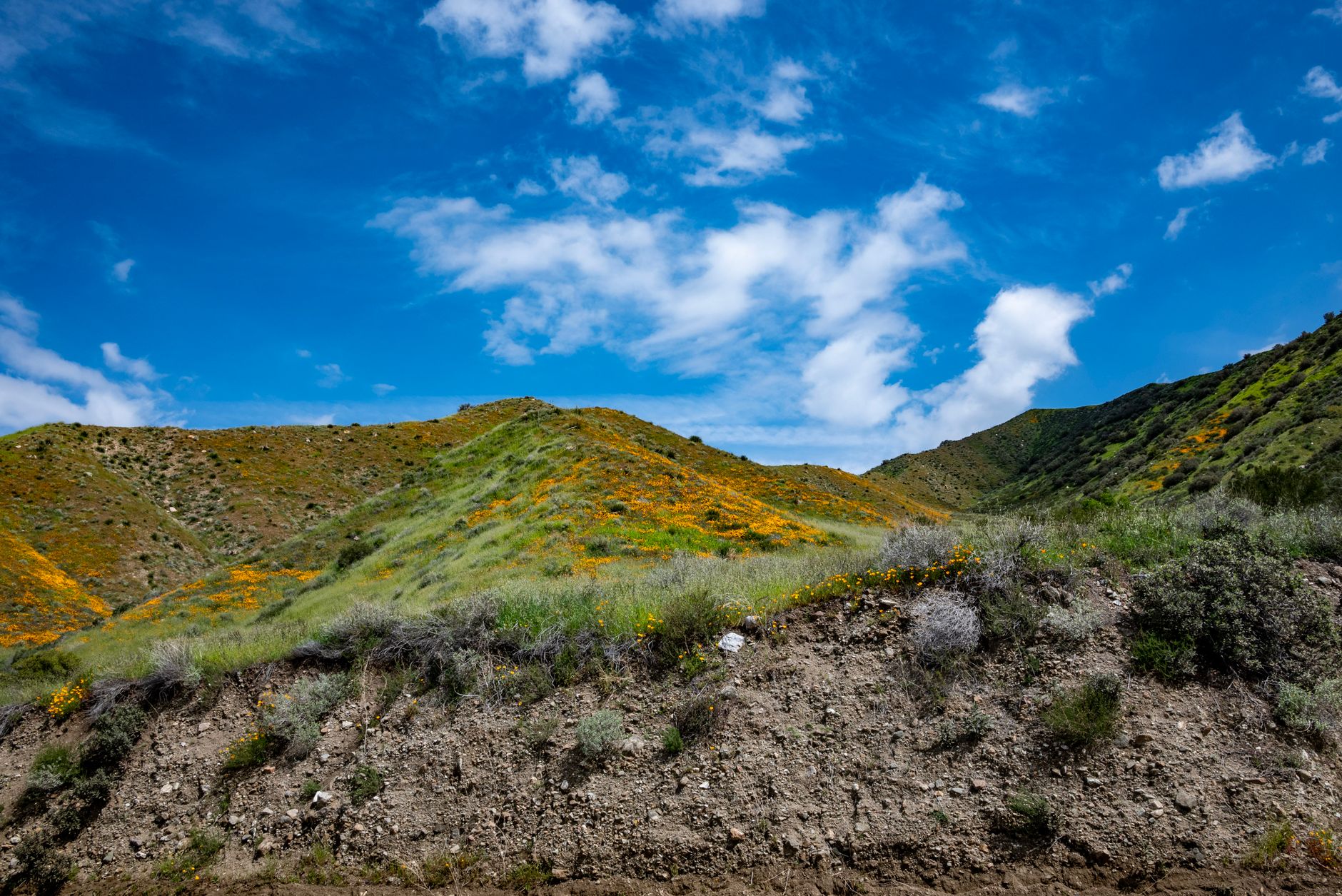
- Wildflower meadows that, in April and May, produce one of the most spectacular displays of native bloom in western Oregon
There are roughly seven miles of trails, ranging from flat, easy loops along the river to the moderate 1.5-mile climb to the 1,531-foot summit of Mount Pisgah itself. A parking pass is required ($5 day-use), and the trails are open year-round from dawn to dusk. Dogs are allowed on leash.
🌼 The Mount Pisgah Wildflower Festival
The annual Wildflower Festival is the arboretum’s marquee event and one of the most beloved community gatherings in Lane County. It typically takes place on a Sunday in mid-May (check the arboretum’s website for the exact 2026 date), and it draws thousands of visitors for a day of guided wildflower walks, live music, kids’ activities, native plant sales, and nature education.
What makes the festival special:
- Guided wildflower walks led by volunteer botanists and naturalists who know every species on the trail by name, habitat, and story. These walks are free with festival admission and are the single best way to actually learn what you are looking at.
- The native plant sale. Local nurseries and conservation groups sell native wildflowers, grasses, shrubs, and trees that you can take home and plant in your own yard. If you have ever walked the Pisgah trails and wished your garden looked like that, this is where you start.
- Live music and food. Local bands play on a small stage near the trailhead, and food vendors set up along the main path. The atmosphere is relaxed, communal, and very Eugene.
- Kids’ activities. Nature crafts, scavenger hunts, and hands-on learning stations make this one of the best family events of the spring.
- The sheer volume of bloom. The festival is timed to coincide with peak wildflower season, and the meadows in mid-May are typically at their most colorful. It is the kind of bloom that makes people who do not normally care about flowers stop in their tracks and say something like “oh, wow.”
Festival admission is modest (typically around $8 for adults, free for children), and the proceeds support the arboretum’s trail maintenance, education programs, and habitat restoration. It is one of the best values in Lane County entertainment.
🌷 A Florist’s Field Guide to What’s Blooming in May
This is the part where being a florist changes how you experience the trails. Most visitors see “pretty flowers.” We see cousins. We see the wild ancestors of what we work with in the shop. We see color palettes and textures that we try to recreate in arrangements all spring. Here is what you will find on the trails in May:
Camas (Camassia quamash and C. leichtlinii). The star of the show. Camas meadows at Pisgah in mid-May are breathtaking — dense carpets of blue-violet flowers that can turn an entire hillside into what looks like a lake seen from a distance. Camas was a critical food source for the Kalapuya people, who managed the valley’s prairies with controlled burns for thousands of years partly to encourage camas growth. What you are seeing at Pisgah is a remnant of a landscape that once extended across the entire Willamette Valley floor. The blue is electric, the effect is vast, and nothing in a flower shop quite replicates it — though we try with delphinium and iris.
Fawn lily (Erythronium oregonum). Oregon’s own native lily, with nodding white or cream flowers on slender stems above mottled leaves. Fawn lilies bloom earlier than camas (late March through April), so by May you may catch the last of them in shaded spots along the lower trails. They are delicate, ephemeral, and one of the most beautiful native flowers in the Pacific Northwest.
Wild iris (Iris tenax). Oregon’s state flower. Purple-blue with intricate veining on the falls, growing in grassy meadows and along trail edges. Seeing wild iris in a meadow setting is a reminder of why iris remains one of the most popular flowers in formal arrangements — the structure, the color, the elegance are all there in the wild version, just smaller and more subtle.
Lupine (Lupinus spp.). Multiple species of lupine bloom at Pisgah in May, from low-growing broadleaf lupine to taller spurred varieties. The blue-purple spires are a classic wildflower sight and a nitrogen-fixer that improves the meadow soil as it blooms. In the shop, we use cultivated lupine in spring arrangements — the wild ones at Pisgah are their scrappier, more determined cousins.
Oregon grape (Mahonia aquifolium). Oregon’s state flower (the other one — it shares the title with iris depending on who you ask). Bright yellow flower clusters on evergreen shrubs along the forest edges and trail borders. The blue-black berries that follow are edible (tart), and the plant is one of the toughest native shrubs in the region.
Meadowfoam (Limnanthes spp.). Small, cheerful white-and-yellow flowers that carpet wet meadow areas in spring. Meadowfoam is commercially grown in the Willamette Valley for its seed oil (used in cosmetics and lubricants), making it one of the rare cases where a wildflower you see on a trail also supports a regional agricultural industry.
Western buttercup, checkermallow, blue-eyed grass, Oregon sunshine, and dozens more. The full wildflower list at Pisgah runs to over 100 species across the season. In May, the meadows are a mix of yellows, blues, purples, whites, and pinks that shift as you move from sun to shade, from hilltop to river bottom. The guided festival walks are the best way to learn the names, but even without knowing what anything is called, the visual effect is remarkable.
⛰️ The Summit Hike
The trail to the top of Mount Pisgah is roughly 1.5 miles from the main trailhead (Trail 1 to Trail 3 is the most direct route), gaining about 1,000 feet of elevation. It is a moderate hike — steady uphill, well-maintained trail, nothing technical — that takes most people 45 minutes to an hour going up and 30 to 40 minutes coming down.
What you see from the 1,531-foot summit:
- The Willamette Valley spreading north toward Junction City and Corvallis, green and flat and enormous
- The Coast Fork and Middle Fork confluence directly below, where the two rivers merge to form the main stem of the Willamette
- The Cascades to the east — on a clear day, the Three Sisters, Broken Top, and Mount Bachelor are visible
- Spencer Butte and the ridgeline to the west, the other anchor of Eugene’s skyline — we wrote a full guide to Spencer Butte in spring
- The river corridors threading through the valley, lined with cottonwood and ash that glow pale green in May
The summit has a peace symbol monument built from local basalt, installed in the 1960s and maintained ever since. It is one of the most photographed spots in Lane County and a place where people propose, scatter ashes, and sit quietly with a view that makes the whole world feel manageable.
In May, the upper meadows near the summit often have wildflowers that differ from the lower trails — more wind-tolerant species, drier-soil plants, and open-grassland flowers that get full sun. The hike up is a bloom gradient, and the view at the top is the reward.
🌳 The Oak Savannas and Why They Matter
The open, grassy meadows at Pisgah are not just pretty — they are ecologically critical. Oregon white oak savannas were once the dominant landscape of the Willamette Valley, maintained by Kalapuya burning practices for thousands of years. When European settlers arrived and fire management stopped, Douglas fir began encroaching on the oak habitat, and today less than 1% of the original Willamette Valley oak savanna remains.
Mount Pisgah Arboretum is one of the places where that remnant habitat is actively managed and restored. The arboretum conducts controlled burns, removes invasive species, and maintains the open meadow structure that allows native wildflowers, grasses, and oak-dependent species to thrive. When you walk through the wildflower meadows at Pisgah, you are walking through a landscape that the Kalapuya would recognize — and that exists today only because people have worked deliberately to keep it alive.
For a florist, there is something deeply grounding about that. The flowers we arrange in the shop exist because of generations of cultivation, breeding, and care. The wildflowers at Pisgah exist because of generations of land stewardship. Both are acts of tending. Both require people who pay attention.
🚶 Practical Tips for Visiting
- Parking: the main trailhead parking lot is at the end of Seavey Loop Road, off I-5 exit 189 (about 10 minutes from downtown Eugene). A $5 day-use parking pass is required and available at the self-pay station. On festival day and busy spring weekends, arrive early — the lot fills by mid-morning.
- Best time of day: mornings are best for wildflower viewing (flowers are fresher, colors more saturated, fewer people on the trail). Late afternoon light is beautiful for photography, especially on the summit.
- Footwear: the lower trails are flat and well-maintained, but after rain they can be muddy. The summit trail is steeper and rockier. Trail shoes or light hiking boots are ideal. Flip-flops will betray you.
- Dogs: allowed on leash throughout the recreation area. Bring water for them — the summit hike is warm in May and there is no shade on the upper section.
- Duration: a flat loop through the lower arboretum trails takes 45 minutes to an hour. The summit hike adds 1.5 to 2 hours round trip. On festival day, plan for 3 to 4 hours to walk, explore, eat, and browse the plant sale.
- What to bring: water, sunscreen (the meadows are fully exposed), a camera, and a willingness to stop often. The trails reward slow walking.
🌊 The River Confluence
One of the most overlooked features of the Pisgah area is the confluence of the Coast Fork and Middle Fork of the Willamette River, which happens just north of the arboretum. The flat trails along the river bottom pass through riparian forest — tall cottonwoods, Oregon ash, bigleaf maple, and an understory thick with ferns, elderberry, and snowberry.
In May, the riverbank areas have their own wildflower show, different from the upland meadows: more shade-tolerant species, more ferns, more green-on-green texture with occasional bursts of color from red columbine, bleeding heart, and larkspur. The river itself is running strong with snowmelt in May, and the sound of water adds a dimension to the walk that the dry summit trails do not have.
If you have already hiked the summit and want a different experience, the river corridor trails are the answer. They are flat, shaded, cool, and beautiful in a quieter, more intimate way. We wrote about the Willamette River through Eugene in a separate article — Pisgah is where the story begins.
🌿 What Pisgah Teaches a Florist
We will end on a thought that is more personal than practical. Working with flowers every day can become routine — you process stems, you build arrangements, you deliver them, you do it again. Walking the trails at Pisgah in May resets something. You see camas blooming in a meadow that has been blooming for 10,000 years and you remember that flowers are not just products. They are living things connected to soil, water, insects, history, and human care.
The arrangements we build at eugeneflorist.com are cultivated versions of what nature does at Pisgah. The color palettes, the textures, the way certain flowers look next to each other — all of that is borrowed from landscapes like this one. A walk at Pisgah in May is the best continuing education a florist can get, and it is free (well, $5 for parking).
If you have not been, go. If you have been but not in May, go back. And if the wildflowers inspire you to send someone flowers — because that is what beauty does, it makes you think of the people you love — we are here.
href="/gifts-occasions" title="Gift Baskets"