
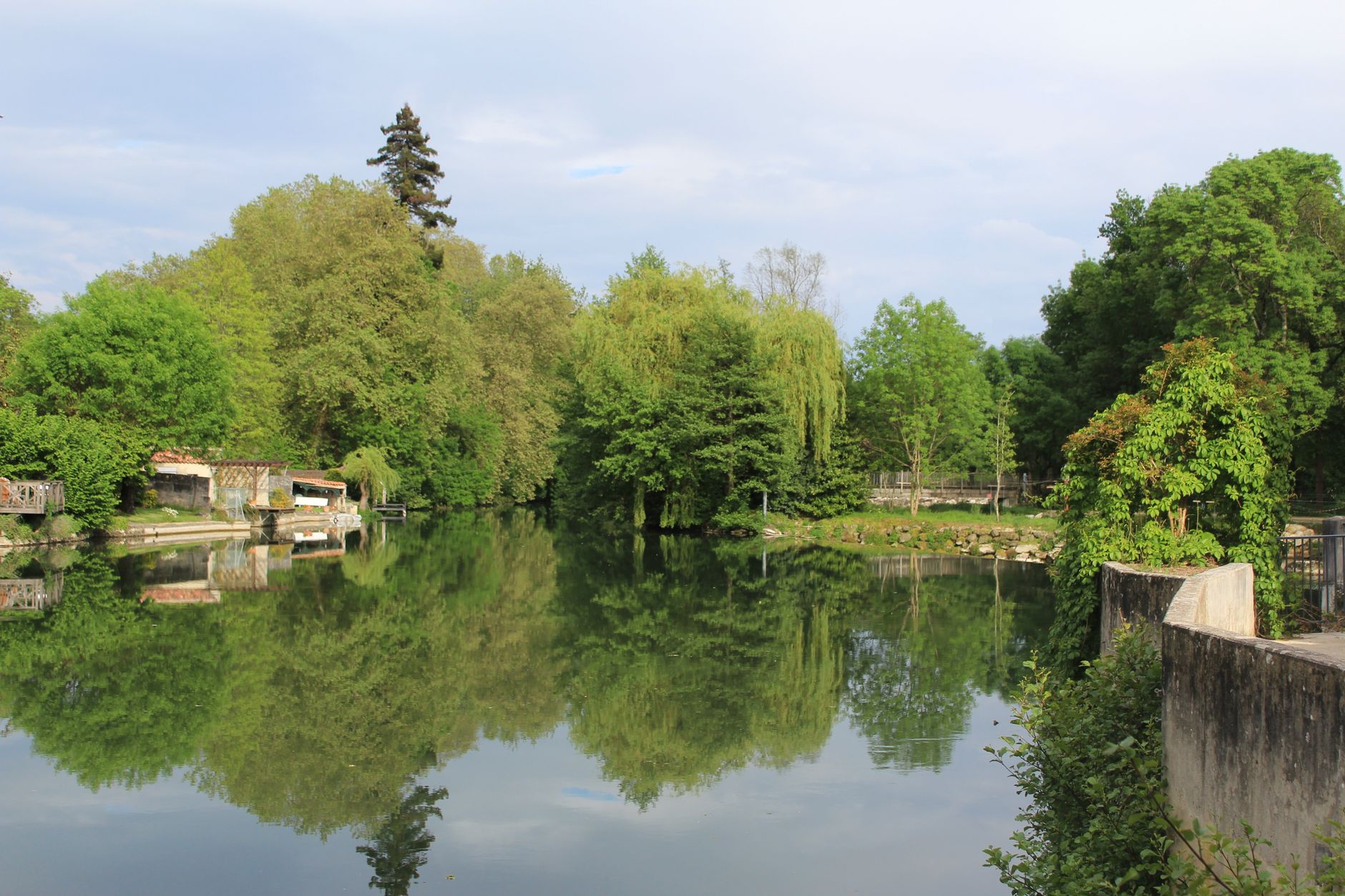
The Willamette River runs right through the middle of Eugene and Springfield, and most of us barely notice it. We cross it on the Washington-Jefferson Bridge. We bike past it on the path. We glance at it from the DeFazio Bridge on the way to Alton Baker Park. But we rarely stop and actually look at it.
That’s a mistake, especially right now. In April, the Willamette corridor through Eugene is one of the most beautiful stretches of urban river in the Pacific Northwest — full of nesting birds, blooming wildflowers, cottonwood canopy, and the kind of quiet green-and-blue scenery that makes you wonder why you ever go anywhere else.
📜 The River’s Story
The Willamette River begins as two forks in the Cascade foothills southeast of Eugene. The Coast Fork and the Middle Fork merge at the southern edge of Springfield near the town of Jasper, and from there the Willamette flows north through Eugene, Corvallis, Salem, and Portland before joining the Columbia River.
The total length is about 187 miles, making it the thirteenth-largest river in the continental United States by volume. Eugene sits near the very beginning — the river here is still relatively narrow, clear, and fast-moving compared to its broad, slow character by the time it reaches Portland.
The Kalapuya people lived along the Willamette for thousands of years before European settlement, managing the valley with controlled burns that created the oak savannas and camas prairies that defined the landscape. The river was their highway, their food source, and the center of their world. Eugene was founded on the river’s banks in 1862, and the city’s relationship with the Willamette has evolved from industrial use (log drives, mill ponds, municipal dumping) to the recreation-and-conservation approach we see today.
The cleanup of the Willamette is one of Oregon’s great environmental success stories. In the 1960s, the river was so polluted that Governor Tom McCall famously called it “an open sewer.” Decades of regulation, restoration, and community effort turned it into the clean, swimmable, fishable river we have now.
🦆 Wildlife on the River
The Willamette through Eugene supports a remarkable amount of wildlife, much of it visible from the bike path or the riverbanks:
- Great blue herons — The iconic wading birds are everywhere along the river, standing motionless in the shallows or launching into slow, heavy flight. A rookery near the river hosts nesting pairs in spring.
- Osprey — Fish-hunting raptors that dive feet-first into the river. Nesting platforms have been installed along the Willamette, and you can often see osprey carrying fish back to their nests in April and May.
- Bald eagles — Less common than osprey but present, especially in the stretches south of town near Jasper and Dexter.
- Canada geese — Everywhere. Raising goslings on every gravel bar. You already knew this.
- Wood ducks — The most colorful duck in North America, nesting in tree cavities along the river. Watch for them in the quieter sloughs and side channels.
- River otters — Present but elusive. Early morning is your best chance, especially near the Owosso canoe canal and the backwater areas near Alton Baker Park.
- Beaver — Active along the river and its tributaries. Look for gnawed trees and lodge structures along the banks.
- Chinook salmon and steelhead — The Willamette supports runs of spring Chinook salmon and winter steelhead. The fish ladder at Leaburg Dam on the McKenzie (a major tributary) is worth a visit in spring.
- Pacific lamprey — An ancient, eel-like fish that migrates up the Willamette. Culturally significant to the Kalapuya and other tribal nations.
- Painted turtles — Basking on logs in the sloughs and side channels on warm April days.
🌺 What’s Blooming Along the River in April
The Willamette’s riparian corridor is a distinct ecosystem — the mix of moisture, sun exposure, and rich alluvial soil creates conditions that support a specific community of native plants:
- Oregon grape — Bright yellow flower clusters on the state flower. Everywhere along the banks.
- Red-flowering currant — Pink-red drooping clusters that hummingbirds adore. Common in the understory.
- Camas — Blue-purple spikes in the wet meadows adjacent to the river, especially near Alton Baker Park and the Delta Ponds area.
- Western buttercup — Glossy yellow flowers carpeting the floodplain meadows.
- Cottonwood catkins — The massive black cottonwoods along the river produce dangling catkins in spring before releasing their signature cotton in May and June.
- Wild rose — Nootka rose and clustered wild rose bloom along the banks, peaking in May but starting in late April.
- Lupine — Blue-purple spikes in the gravel bars and open areas along the river.
- Snowberry — Small pink flowers on the shrubs that will produce white berries later in the year.
- Osoberry (Indian plum) — One of the earliest bloomers, with drooping white flower clusters and a distinctive almond scent. Already finishing by mid-April.
We covered Amazon Creek’s flowers in our Amazon Creek piece, and the Alton Baker Park guide has detailed walking routes along the river’s north bank. For wildflowers farther afield, the covered bridges piece covers the river corridors southeast of town.
🚶 Where to Walk Along the River
The best riverside walks in Eugene, from west to east:
- Greenway bike path (west bank) — The Ruth Bascom Riverbank Path System runs for 12 miles along the Willamette’s south bank. The stretch between Valley River Center and the DeFazio Bridge is the most popular and passes through cottonwood forest, open meadows, and several river viewpoints.
- Alton Baker Park (north bank) — Across the DeFazio Bridge from downtown, with trails through wetlands, the Whilamut Natural Area, and connections to the canoe canal. This is the best area for bird watching.
- Skinner Butte riverfront — The north base of Skinner Butte has river access, a boat ramp, and views of the Willamette as it bends through downtown. Good for a short walk or a picnic.
- Owosso canoe canal — A side channel off the Willamette that runs through a wooded corridor east of Alton Baker Park. Quiet, shaded, and full of wildlife.
- Delta Ponds — A restored wetland complex just north of Valley River Center, connected to the Willamette by side channels. One of the best birding spots in Eugene.
- Eastbank path (Springfield side) — The path continues into Springfield along the river’s east bank, passing through D Street and Island Park. Less crowded than the Eugene side. We wrote about Springfield’s river character in the Springfield and Thurston piece.
🛶 On the Water
The Willamette through Eugene is paddleable and swimmable (in summer):
- Kayaking and canoeing: Put in at the Alton Baker Park canoe canal or the boat ramp below Skinner Butte. The stretch from Alton Baker to Valley River is gentle, scenic, and beginner-friendly. Spring flows are higher and faster than summer — wear a PFD and check conditions.
- Swimming: The river is swimmable in summer at several informal access points, though April water temperatures are still cold (low 50s °F). The official swim season starts in June.
- Fishing: Spring Chinook season on the Willamette draws anglers to the river from April through June. Bank fishing is popular near Skinner Butte and the Springfield side.
🌍 The River’s Future
Eugene has invested heavily in Willamette River restoration in recent decades — the Delta Ponds project, native plant restoration along the banks, the Whilamut Natural Area in Alton Baker Park, and improved stormwater management to protect water quality. The river is cleaner, more accessible, and more ecologically diverse than it has been in over a century.
Climate change presents challenges: earlier snowmelt, lower summer flows, warmer water temperatures that stress salmon and steelhead. But the restoration work has built resilience, and the community’s commitment to the river remains strong. Eugene’s relationship with the Willamette is one of its best qualities.
💐 The Flower Connection
The Willamette corridor is one of the reasons Eugene grows great flowers. The river’s alluvial soils are rich. The moisture moderates temperatures. The mild, wet winters and warm, dry summers create ideal growing conditions for both commercial cut flowers and home gardens.
And there’s this: walking along the river in April, watching the camas bloom and the herons fish, tends to make people want to do something beautiful for someone else. That’s where we come in.
Browse what’s fresh at eugeneflorist.com. We deliver same-day across Eugene, Springfield, and Lane County. 🌸🌊