A lot of people search for flowers without fragrance, and they are not being fussy. They are sending something to a hospital room, setting a table for a big dinner, buying for a coworker with a sensitive nose, or trying to find a bouquet that will not give anyone a headache. Our list of the least fragrant flowers is the fun version of this topic. This is the practical one.
🧐 The Honest Answer First
No flower is perfectly scentless. Scent is how flowers talk to pollinators, and almost every bloom gives off something if you put your nose right up to it. What a florist can do is pick flowers whose scent is faint or absent from across a room, and that is what “scentless” means in practice. Think of it as a dial from “you have to look for it” up to “you can smell it from the hallway,” and the goal is to stay at the quiet end.
🌷 The Quiet End of the Dial
As a general rule, these are the flowers florists reach for when scent needs to stay in the background. Varieties differ, so treat this as a starting point rather than a guarantee.
- Orchids — the long-lasting kind in the pot or a cut stem. Elegant, and generally very faint.
- Calla lilies — a clean, sculptural look with little to no noticeable scent.
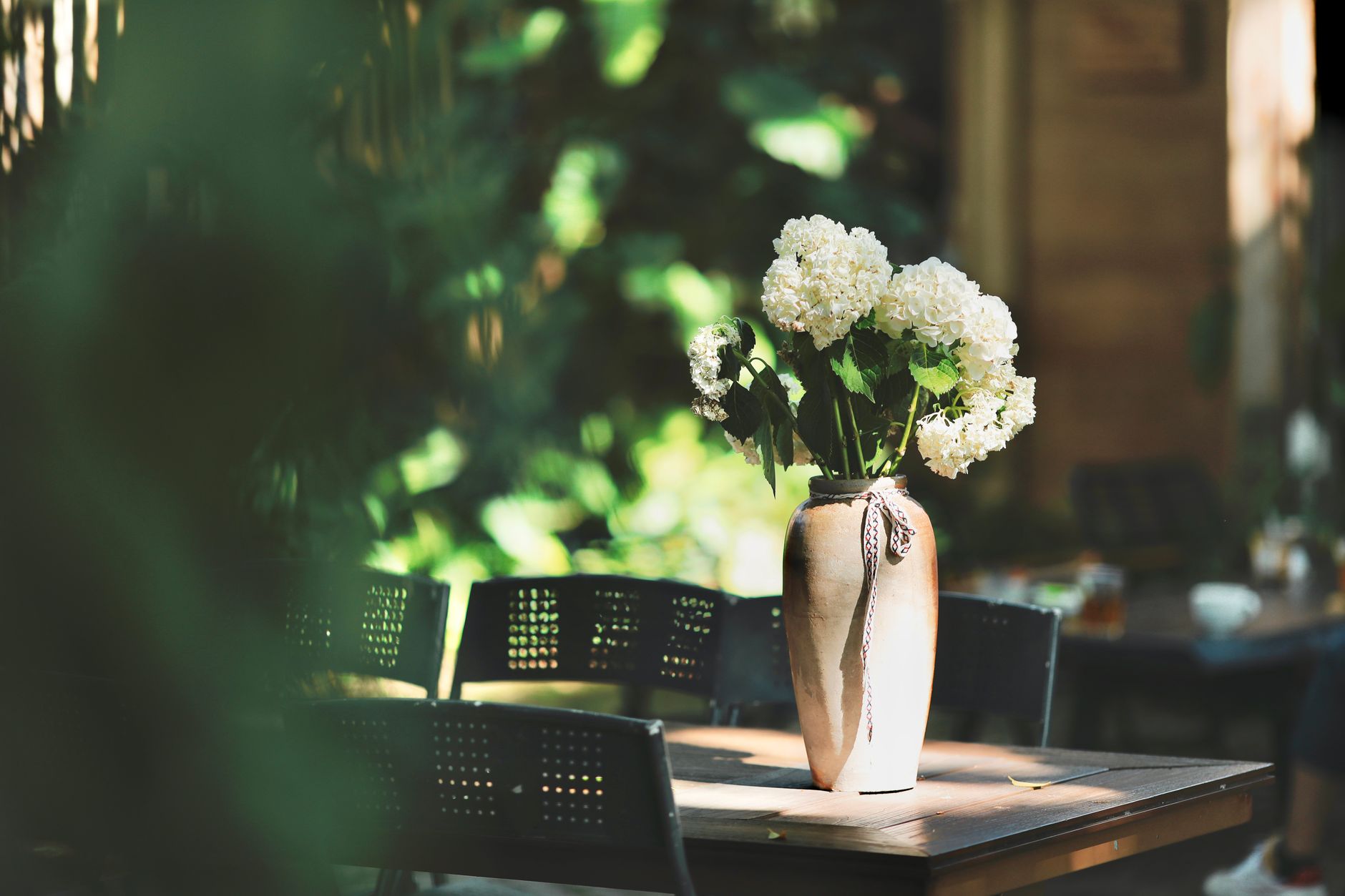
- Hydrangea — big, full heads that fill an arrangement without perfuming the room.
- Tulips — most are quiet, though a few varieties do carry a light scent.
- Gerbera daisies, alstroemeria, and ranunculus — bright, cheerful, and low on fragrance, all of them on our least-fragrant list.
- Carnations and chrysanthemums — a faint, slightly green or spicy note at most, nowhere near the top of the room-filling rankings.
- Roses from a florist — here is a surprise. Many roses grown for the cut-flower trade were bred for long vase life, big blooms, and the ability to survive shipping, and fragrance was often given up along the way. A classic red florist’s rose frequently has much less perfume than the garden rose you remember. Garden roses are the exception, and they can be strongly scented.
🌿 The Part That Catches People Out: Greenery and Herbs
You can choose perfectly quiet flowers and still end up with a fragrant bouquet, because the extras speak up. Eucalyptus is the classic culprit, with a sharp, clean, medicinal smell that fills a small room. Herbs such as rosemary and mint, lavender, and some filler plants add their own notes; even Bells of Ireland and Queen Anne’s lace carry a green, earthy smell that surprises people. If low scent is the goal, ask for plain, mild greens, or none at all. A bouquet that is only flowers is the quietest option.
And do not forget what sits at the other end of the dial. Lilies, hyacinth, paperwhite narcissus, and jasmine are lovely in a hallway and overwhelming in a closed room. Our most-fragrant list shows the full cast, which is useful when the goal is to avoid them.
🏥 When Low Scent Matters Most
- Hospital and care settings. Rooms are small, air is shared, and patients can be more sensitive to smell than usual. Keep it small, simple, and quiet. If you are sending flowers to someone in treatment, read our guide to sending flowers during cancer treatment first, and ask whether flowers are welcome at all. Our get-well flowers page has more ideas.
- The dinner table. Food has its own aroma, and a strongly perfumed centerpiece competes with it. Our food-and-flower pairing guide goes through the rules.
- Offices and shared spaces. Your desk neighbor did not choose your bouquet. Low-scent flowers are the polite choice.
- Sympathy and memorial services. Grief can make people sensitive to strong smells, and a service room fills up quickly. Quiet flowers are often the kinder choice. See our sympathy flowers page.
- Anyone who has told you they react to scent. Migraines, nausea, and asthma are all reasons people avoid fragrance. If someone has told you, believe them. This is general information, not medical advice.
🤧 Scent Is Not the Same as Pollen
These two get mixed up all the time, and they are different problems. A fragrance sensitivity is a reaction to the smell. A pollen allergy is a reaction to the pollen grains. A flower can be low on one and not the other, so a scentless flower is not automatically a low-pollen one. If you or the recipient has hay fever, our guide to the worst pollen-offender flowers in the Willamette Valley is worth a skim, and so is our guide to pollenless sunflowers. Eugene is a valley that knows a thing or two about grass pollen, so a recipient here may well be dealing with both.
One easy trick for lilies: the orange pollen-bearing anthers can be gently pinched off as the flowers open, which keeps the pollen from staining and spreading.
📝 Three Things to Check Before You Order
- Look at the flower list. If a design includes lilies, hyacinth, jasmine, or paperwhites, choose a different one.
- Check the greenery. Eucalyptus and herbs are the usual surprises.
- Think about the room. A small, closed room magnifies scent. A large room with air moving barely notices it.
Ready to look? Browse our arrangements, check the blooms listed for each design, and we will deliver to Eugene, Springfield, and across Lane County. We deliver in Springfield, Coburg, Junction City, and throughout the area.