It is late October, and peony season is a little over six months away. That is exactly why this is a good week to talk about it. Peonies are the one flower that people start asking about long before they can be bought — the same handful of questions, every year, as soon as the weather turns warm: when are peonies in season, why are they so expensive, why did mine arrive as a hard little ball, and how long will they last? Here are the answers in one place, from the botany to the vase.
🌱 Next Spring’s Flowers Are Already Forming
Here is the detail that explains most of the peony’s reputation. A herbaceous peony dies back to the ground every autumn, but the plant is not idle. Botanical references describe the flower buds as starting to differentiate in October, as the stems die down, and being fully formed — sepals, petals, stamens and all — by December. In other words, the peonies you will buy next May are already sitting under the soil right now, waiting out the winter.
The plant then needs real cold to do its part, which is why peonies are a cool-climate flower and why they cannot simply be grown year-round in a greenhouse the way roses can. Once the flower opens, it does not last long on the plant either; a single bloom typically holds for only about 7–10 days. A short season is built into the flower itself.
📅 When Are Peonies in Season?
Peonies are a field-grown, seasonal flower, so the honest answer depends on where the stems are coming from. For the fresh-cut peonies you can actually buy in North America, the calendar roughly runs like this:
- California: late April through May. The first domestic peonies of the year. If you are searching for peony season in California, this is the window, and a warm spring can pull it earlier.
- Oregon and Washington: late May through June. Cooler springs push the Pacific Northwest harvest later, and this is the main flush of domestic supply.
- Alaska: mid to late summer. Long summer daylight gives Alaska a peony harvest after most other sources have finished, so a few stems can show up well after the June rush.
- The Netherlands: spring. The Netherlands is the largest cut-peony producer in the world, with figures around 50 million stems a year frequently cited, and Dutch peonies help fill the shelves around the same time as the domestic harvest.
- Chile and New Zealand: our off-season. Because the Southern Hemisphere flips the calendar, these growers can ship peonies when the Northern Hemisphere has none — at a real premium, and after a long trip.
The practical summary: for most of the country, peony season is roughly late April through June, with California first and the Pacific Northwest last. Outside that window, peonies are an import, a gamble, or both. For local detail, our Eugene florist’s last-week-of-peonies love letter covers the Oregon side, and our Bay Area florist’s peony season guide covers the California side. For everything else that is fresh that month, see our month-by-month guide to what is in season.
🧁 The Marshmallow Stage: Why Your Peonies Arrive as a Hard Ball
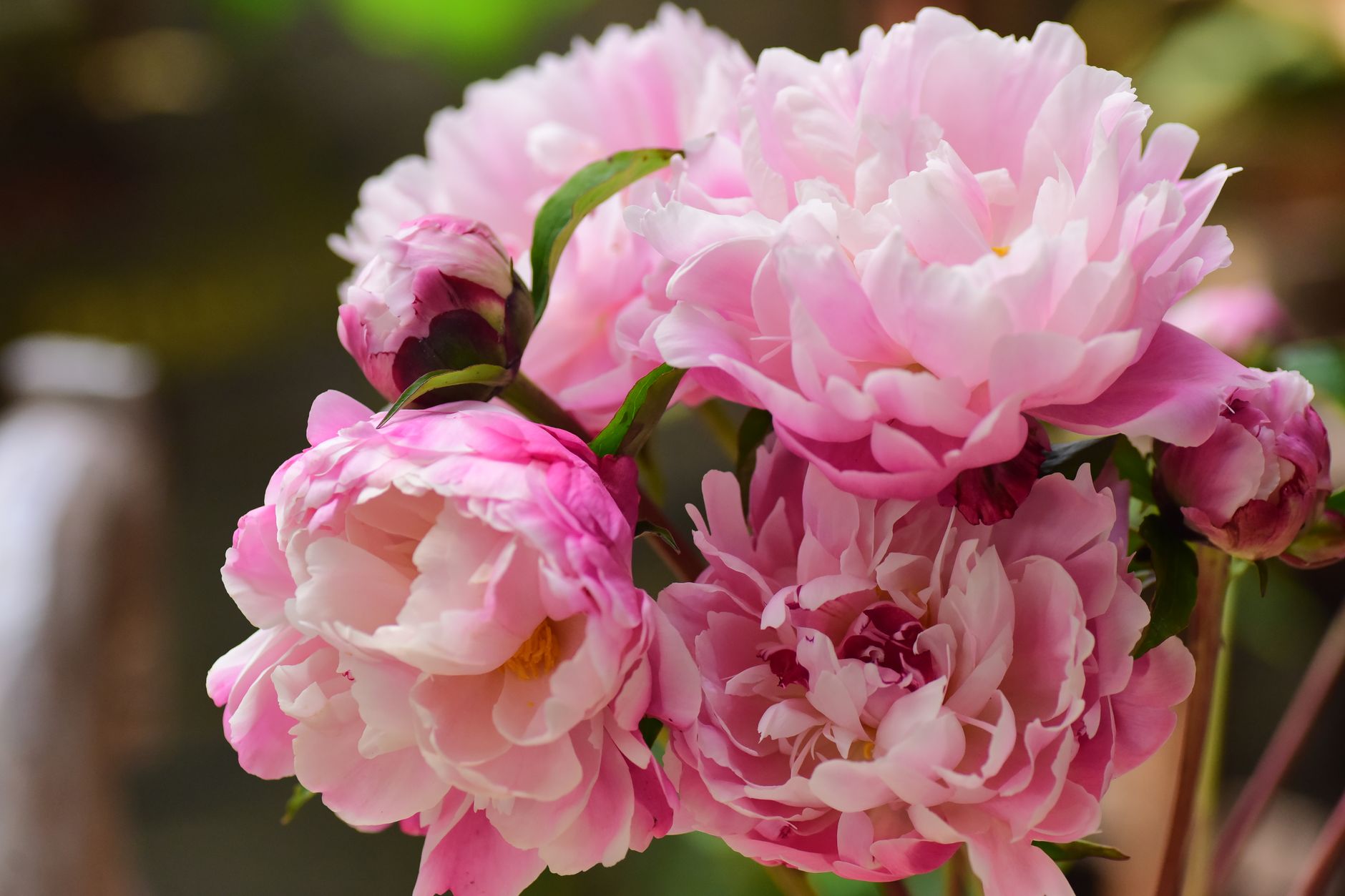
This is the single most important thing to understand about cut peonies, and the one that surprises almost everyone. Peonies are harvested, shipped and sold as buds, and the stage at which they are cut decides whether they ever open at all. Growers call the ideal stage the marshmallow stage: the bud is soft when you give it a gentle squeeze, with color showing but the petals not yet unfurling.
A bud cut too tight, one that feels like a marble, will often never open in the vase. A bud at the marshmallow stage will open beautifully indoors, usually over a few days. So when a florist hands you peonies that look like green-and-pink golf balls, that is not a problem — that is the correct delivery condition. The transformation is half the appeal: a bud the size of a golf ball opens into something many times larger, and it is worth watching happen.
💧 How to Make Peonies Last (and Open on Schedule)
With good care, cut peonies last about 5–7 days in a vase. These are the habits that matter:
- Recut the stems. Trim at an angle, ideally under running water or while submerged, and recut each time you change the water.
- Strip the lower leaves. Anything below the waterline breeds bacteria and shortens vase life. Start with a clean vase.
- Use fresh, cool water. Change it daily, or use flower food if the arrangement is too full to change.
- Keep them cool. Away from direct sun, heaters, and fruit bowls, since ripening fruit gives off ethylene gas. Moving the vase into the fridge overnight, or adding a few ice cubes, stretches the display further.
- To open them faster for an event, put marshmallow-stage stems in warm (not hot) water in a warm, bright spot. Growers say the buds can open within a day or two. Once they are open, move them somewhere cool so they last.
For the all-flower version of these rules, see our pro tips for keeping cut flowers fresh. And accept the mess: peonies drop their petals dramatically, and a pile of them on the table is not a failure, it is the last act.
🐜 What About the Ants?
Peony buds are sticky with nectar on the outside, and ants love it. They are harmless to the flowers, and they are not required for the buds to open — that is an old garden myth. Botanists note the nectar is not needed for the plant’s own pollination or growth, and the ants may even help by discouraging other insects. Before bringing stems indoors, shake them gently outdoors or rinse the blooms under cool running water, and the ants are gone.
💰 Why Are Peonies So Expensive?
Every reason is built into the plant. Peonies are field-grown, seasonal, and ready for only a few weeks. A new plant takes years to reach full production. The buds have to be cut at precisely the right stage and handled gently. And demand is enormous and arrives all at once, around Mother’s Day and wedding season. When peonies are out of season, the flowers also have to travel from the opposite hemisphere, which adds cost and reduces how fresh they are on arrival.
For the broader picture, our guide to why some flowers are so expensive covers the economics, and our wedding flower cost guide shows where peonies land in a real budget. If you are planning a peony bouquet for a specific date, order early: the best colors sell out first.
🌷 Peony Varieties Worth Knowing
There are around 33 recognized wild species and more than 7,000 registered cultivars, which is a lot of peonies. Three plant types cover almost everything you will encounter:
- Herbaceous peonies die back to the ground each winter and are the workhorse of the cut-flower trade. This is the group nearly every florist’s peony belongs to.
- Tree peonies are shrubs with permanent woody stems. They are spectacular garden plants, but they are not what is in the bucket at the flower shop.
- Itoh (intersectional) peonies are crosses between the two, first made in the 1940s by a Japanese breeder named Toichi Itoh. They are herbaceous, have leaves like a tree peony, and are known for large flowers and good resistance to wilt.
Names you will hear most often in the flower trade:
- Sarah Bernhardt: the classic soft pink double, and by far the best-known cut peony. By one commonly cited estimate, more than 20 million of the Netherlands’ stems each year are this one variety.
- Coral Charm: a semi-double salmon-pink, and a favorite for coral and peach wedding palettes.
- Festiva Maxima: a full white double with small crimson flecks near the center.
- Karl Rosenfield: a deep, true red.
- Bartzella: a yellow Itoh with many large blooms, and a standout among the Itoh group.
Flower shape matters too. Growers sort peonies into single, Japanese, anemone, semi-double, bomb and double forms, and the fully double and bomb types are the cloud-like look people picture when they say “peony.” Many varieties are fragrant, and some barely at all, so if scent matters, ask what is in the cooler that week.
👑 What Peonies Mean
The peony is one of the longest-used flowers in Eastern culture. In China it is called the “king of flowers” and the “flower of riches and honor,” and the Qing dynasty named it the national flower in 1903. Luoyang is still famous for its annual peony exhibitions. In the Western language of flowers, an old legend about mischievous nymphs hiding in the petals gave it the meaning of bashfulness. In the United States, the peony became the state flower of Indiana in 1957, replacing the zinnia. For the meanings of other flowers, see our guide to flower symbolism.
🌿 Can You Grow Your Own?
Yes, if your winters are properly cold. The honest warning is patience: a newly planted peony usually takes a few years to bloom, and once established it can bloom every year for decades. Two rules do most of the work. First, plant the root shallowly — a peony planted too deep will make leaves and no flowers. Second, do not move it unless you have to, because it takes several years to settle in again. Bare-root peonies are planted in the fall, which makes right now the right moment. Our Bay Area florist wrote a longer guide to growing peonies in a mild climate for anyone gardening somewhere warmer.
🌹 If You Cannot Get Peonies
Out of season, a few flowers borrow the peony look. Garden roses are the closest stand-in, with the same ruffled, many-petaled shape. Ranunculus and double late tulips (often sold as “peony tulips”) give you a similar fullness earlier in spring, and in late summer a big dahlia does the same job. They are not peonies, but a good florist will happily build you something that reads as one.
❓ Quick Answers
- When are peonies in season? Late April through June for most of the country: California first, then Oregon and Washington, with a small late-summer supply from Alaska.
- How long do peonies last in a vase? About 5–7 days with good care.
- Why won’t my peonies open? The buds were probably cut too tight. Cool storage and a cold vase slow them down; warm water and a warm room speed them up.
- Do ants hurt peonies? No. Shake or rinse them off before you bring the stems in.
- Are peonies available year-round? Not fresh and local. Imports from the Southern Hemisphere exist, at a premium.
- Why are peonies so expensive? Short season, years of plant growth, careful handling, and demand that peaks all at once.