
Some flowers announce themselves. Peonies show up like an event. Sunflowers demand a whole room. Citrus blossoms do the opposite — they are small, plain white, and easy to miss entirely, right up until you catch the scent, which is so strong and so specific that entire perfumes are built around a single note of it. It seems only fair that the flower responsible for every lemon, lime, and orange we will ever eat gets its own moment, so here it is: the actual citrus blossom, the surprisingly loaded history hiding inside it, and the sunny yellow arrangement trend it inspired without anyone quite realizing where the idea came from.
🌿 The Flower Nobody Notices
A citrus blossom is small — usually under an inch across, with five waxy white petals and a cluster of golden stamens in the center. Orange blossoms are pure white. Lemon blossoms are nearly identical but often carry a faint purplish-pink blush on the outside of the petals before they fully open, which is the easiest way to tell the two apart at a glance. Both share one genuinely unusual trait: citrus trees can flower and hold ripening fruit on the same branch at the same time, meaning a single healthy tree can be blooming and fruiting simultaneously. It is one of the few plants where the flower and the fruit are not really separate seasons at all.
The fragrance is the part people actually remember. It is heavy, sweet, and unmistakable — the exact scent extracted for neroli oil, one of the most prized ingredients in high-end perfumery, distilled from orange blossoms specifically. If you have ever wondered why a “citrus” perfume note smells nothing like biting into an orange, this is why: it is not the fruit you are smelling in those bottles. It is the flower.
👰 The Bridal Tradition Almost Nobody Traces Back Far Enough
Here is the detail that surprises most people: the orange blossom has been a wedding symbol for far longer than the white wedding dress it usually accompanies. The tradition traces back to ancient China, where the blossom’s purity and its unusual ability to bloom and bear fruit at once made it a natural symbol of both innocence and fertility. It spread into Europe through the Crusades, took root first in Spain, and by the early 1800s the English phrase “to gather orange blossoms” had become a genuine, widely understood idiom meaning to seek a wife.
Queen Victoria is the reason most people associate it with weddings at all. When she married Prince Albert in 1840, she wore a wreath of real orange blossoms in her hair instead of a tiara — a striking, deliberately understated choice for a reigning monarch — and paired it with orange blossom trim on her gown. The look set off a bridal trend that lasted generations, and Albert reportedly kept the tradition alive afterward by gifting her orange-blossom-themed jewelry throughout their marriage. If you have ever priced out wedding flowers and wondered why certain blooms carry more symbolic weight than others, the orange blossom is one of the oldest and most quietly loaded examples in the entire bridal flower tradition — a single small white flower doing the work of an entire vow.
🍋 The “Lemonade” Arrangement Everyone Keeps Making Right Now
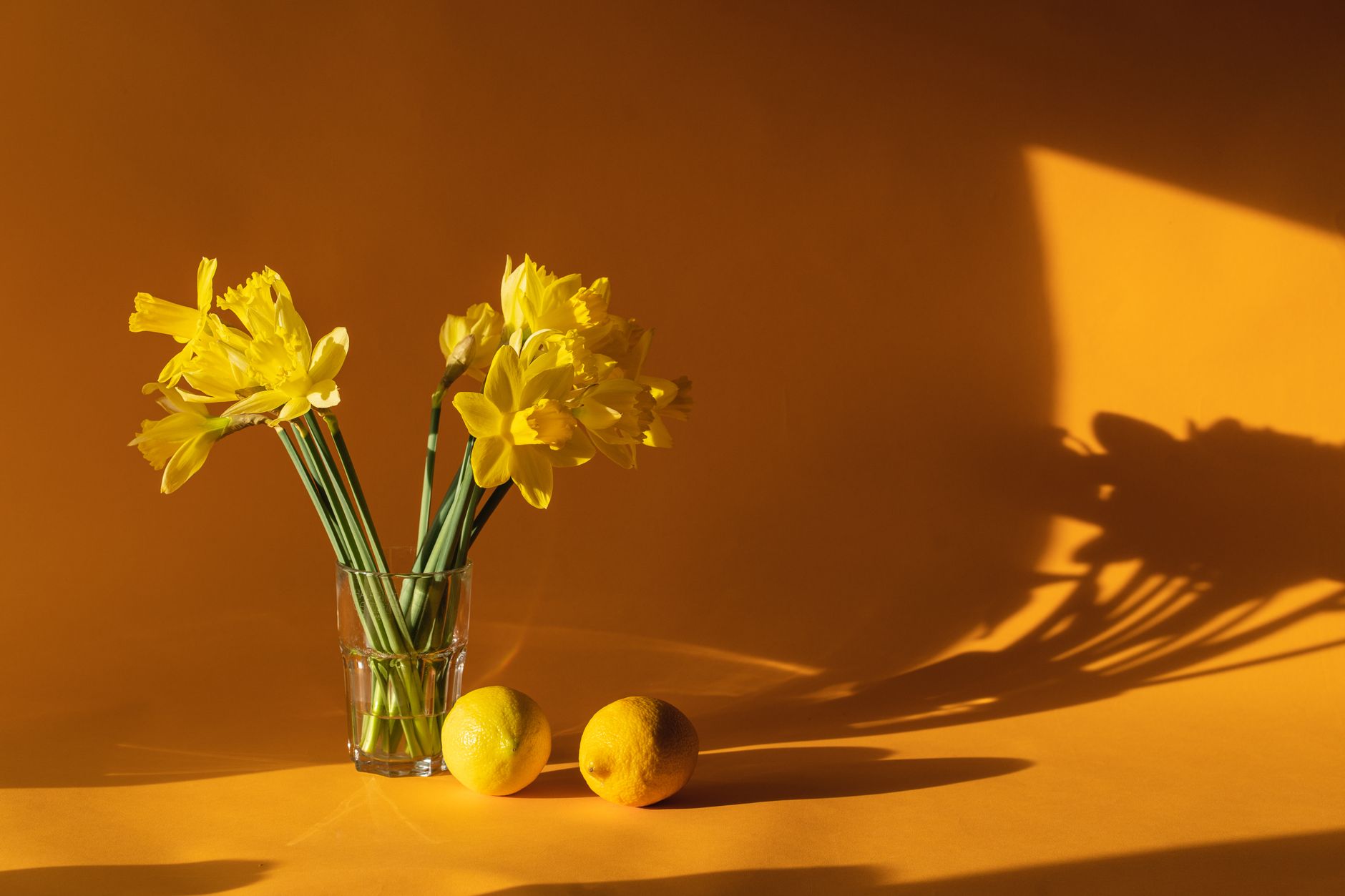
Somewhere in the last few years, a specific look started showing up constantly on kitchen counters, hostess tables, and porch photos: bright yellow flowers — ranunculus, daffodils, yellow roses, whatever is freshest that week — paired with real lemons tucked into the base of the arrangement or set beside the vase entirely unarranged, the way they were photographed above. Call it the lemonade palette: yellow, white, and green, styled to look like it belongs on a summer porch even in the dead of winter. It works because it borrows a color combination we already associate with something specific and pleasant — the smell of a cut lemon, the visual of a lemonade stand, the particular cheerfulness of a color that shows up on almost nothing else in nature quite this saturated.
The easiest version to recreate at home needs almost nothing: a simple glass vessel, an odd number of yellow stems, and two or three whole lemons set at the base rather than in the water. It photographs beautifully, costs very little, and reads as considerably more styled than the five minutes it actually takes.
🍃 The Fruit-Named Ingredient That Has Nothing to Do With Fruit
Here is a genuinely fun bit of florist trivia, and one most customers have never once questioned: an enormous amount of the glossy, broad green foliage used as filler in bouquets around the world is sold in the trade under the name “lemon leaf.” It is not a citrus plant at all. The actual plant is salal, a Pacific Northwest native shrub, and it earned the “lemon leaf” nickname purely because its broad, waxy, oval leaves happen to resemble the shape of an actual lemon tree leaf — nothing to do with scent, and nothing to do with flavor. It has become such a standard industry term that most florists use it their entire career without ever being asked where it came from. Now you know, and you are legally allowed to bring it up the next time someone hands you a bouquet.
🍋 Bringing the Citrus Look Home
You do not need an actual citrus tree to borrow the mood. A few practical ways to work it into a real arrangement:
- Lean into yellow-and-white combinations — daffodils, yellow ranunculus, white daisies, or yellow roses paired with something crisp and white keep the palette feeling exactly like the photo above.
- Add whole citrus, not slices, if you want it to last. A cut lemon looks striking for about a day before it dries out and dulls. Whole fruit holds its color and shine for the full life of the arrangement.
- Skip anything overly fragrant if it is going on a dining table. Real citrus blossom is gorgeous but genuinely strong-smelling up close — lovely in a hallway or entryway, a lot to sit next to during dinner.
- Use it for exactly the occasions that call for something bright, not solemn. Hostess gifts, a new-home housewarming, a just-because Tuesday, or a kitchen that could use a little life — this palette is built for cheerful, not formal.
Not every flower needs a serious occasion or a deep tradition to be worth having in the house. Sometimes the appeal really is this simple: yellow is a good color, lemons smell incredible, and a small glass of daffodils next to two pieces of fruit is a more complete little scene than most arrangements twice the price.