Most of us in the Eugene area cross into Springfield without noticing. The line is Interstate 5, and on the other side is a city of 61,851 people that is the second-largest in the metro area and the ninth-largest in Oregon. It has its own downtown, its own schools, its own hospitals and its own history, and a lot of that history runs along a canal that most people have never walked beside. We deliver flowers to Springfield every day, so we have learned a few things about it. This is the story of the Mill Race, the mills that grew up around it, the creamery that stayed in business with some unlikely help, and what it all means for anyone sending flowers across the river.
If you want the practical side first, our Springfield delivery page covers neighborhoods, hospitals and how to address an order. If you want more of the town’s personality, our guide to Springfield and Thurston and our look at Main Street Springfield are good companions. What follows is the part those two do not cover.
🌱 A Name From a Spring in a Field
Springfield was named for a natural spring in a field, or prairie, within what are now the city limits. The first people in the area were the Kalapuya, who kept the valley and its food sources productive with controlled burning. The first settler to stake a claim in the Springfield locale was William Stevens, who arrived in October 1847 and began building a house with his three oldest sons. The rest of his family joined him on Christmas Day that year. The Briggs family arrived in 1848, after traveling the “Southern Route” by Klamath Lake, over the Cascades and north through the Rogue Valley, and Elias Briggs went into business running a ferry on the Willamette River. The community was incorporated as a city in 1885.
That is the town in brief: a spring, a few families, a ferry and a river. What turned it into a real place was water of a different kind.
🚣 The Canal Dug With an Ox-Plow
In 1852, Elias Briggs and his son Isaac set out to dig a canal. They worked by hand, with shovels and an ox-plow, and their purpose was to bring power to the first grist and saw mills in the area. The result, the Springfield Mill Race, is about 3.5 miles long. It flows from the Middle Fork of the Willamette River, through the south end of Springfield, and into the main stem of the Willamette near Island Park. A year later, in 1853, the Briggs and Driggs company built Springfield’s first gristmill and sawmill, both powered by the water from the Mill Race.
For more than 150 years the Mill Race has been used for water, power, recreation, irrigation and flood and fire control. The old Mill Pond was a place for picnics, canoeing, fishing and swimming, and for a time a diving board and changing room stood at the corner of Mill and 28th. Because the Mill Race connects two arms of the Willamette, salmon found it to their liking too. It is said that the runs were once so abundant that a person could catch fish by spearing them from the bank. We cannot vouch for that, but it is a good story, and it tells you something about how much life was moving through this water.
🏭 The Mills and What Came After
Springfield’s economy followed the water and the timber. Electricity arrived in 1901. In 1902 the Booth-Kelly company built a lumber mill, and then a mill pond to store and move logs. The mill burned in 1911 and was rebuilt. Weyerhaeuser opened its Springfield complex in 1949, and Georgia-Pacific bought out Booth-Kelly in 1959, acquiring the lumber mill and the Mill Race with it. For most of the twentieth century, Springfield’s economy depended on Oregon timber, and Weyerhaeuser was its largest employer.
In the 1990s, after years of aggressive logging had made old-growth lumber harder to find, the Weyerhaeuser sawmill and plywood plants closed and the paper plant was downsized. Springfield has since built a more diverse economy, and today PeaceHealth is the largest employer in the city. The Mill Race, meanwhile, changed hands in a way that matters to everyone who walks beside it now. In 1985, Georgia-Pacific donated about two-thirds of the Mill Race, the Mill Pond and 76 acres of the old Booth-Kelly mill property to the City of Springfield.
🚶 Walking the Mill Race Today
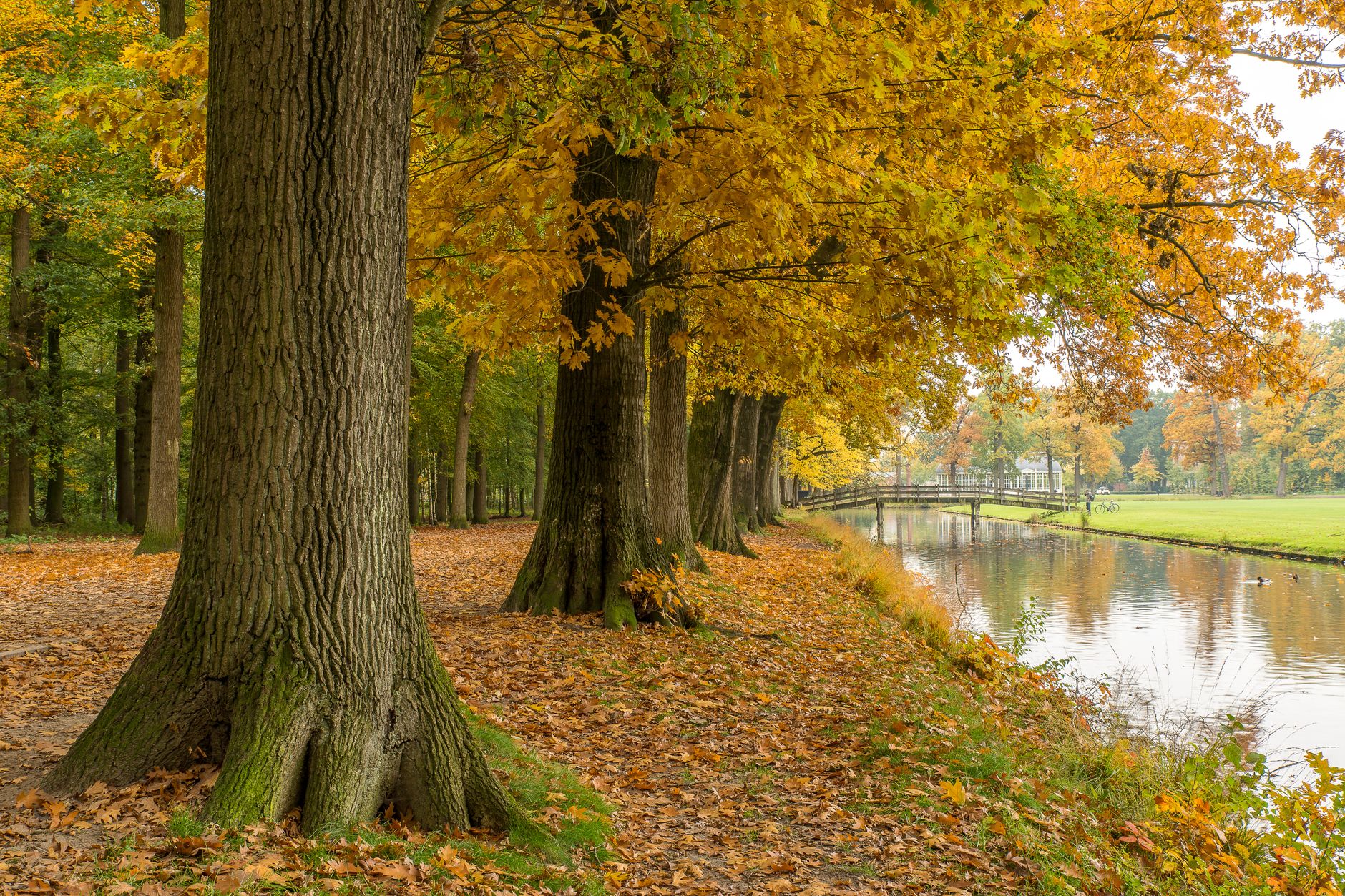
A group of citizens and local leaders developed a “Mill Race Concept” for restoring the canal in 1993. Springfield voters approved a general obligation bond for improvements to the Mill Race system in 1995. In 1998 the city asked the U.S. Army Corps of Engineers to investigate habitat restoration, and restoration work was scheduled to begin in 2005. Today the Mill Race Path is a 3-mile paved multi-use path that runs along the canal from downtown to the Middle Fork Path. You can get on at the Booth-Kelly Trailhead, 307 S. 5th Street, or at the Jasper Road Trailhead, 3202 Jasper Road.
The city’s own list of the creatures that live in and around the Mill Race is long. The fish include native Chinook salmon, cutthroat trout, rainbow trout and Pacific lamprey. The birds, from most common to less common, begin with cackling geese, violet-green swallows, red-winged blackbirds and tree swallows, and run on through American goldfinches, cedar waxwings, mallards and wood ducks to the bufflehead and the lazuli bunting. Beavers, deer, raccoons and foxes live there too, and so do rough-skinned newts and western pond turtles. It is a lot of wildlife for a canal that runs through the middle of a city.
A walk along a creek, a canal or any quiet bit of water is exactly the kind of outing that tends to end with someone wanting flowers on the table. If you are looking for a plant to bring home from the path, our plants and gardens page is a good place to start.
🧀 The Creamery, the Dead and a Cup of Yogurt
One of Springfield’s best stories has nothing to do with timber. In 1960, the brother of the author Ken Kesey and his wife started the Springfield Creamery. Its flagship product is Nancy’s Yogurt. In the 1970s the creamery was close to bankruptcy, and it was saved with the help of the Grateful Dead, who over time held a series of ten benefit concerts on its behalf. The documentary film Sunshine Daydream was shot at the first performance, on August 27, 1972. It is a very Oregon way to keep a dairy afloat.
🌰 Hazelnut Country
Springfield is surrounded by filbert, or hazelnut, orchards, although the acreage has declined over time as fields have been developed into housing. The harvest happens in October, and 98 percent of American filbert production is harvested in the Willamette Valley. The city used to sponsor an annual Filbert Festival in early August, which was canceled in 2007 when a key sponsor withdrew. Just south of downtown, Dorris Ranch, a 268-acre park and working orchard operated by the Willamalane Park and Recreation District, is recognized as the first commercial filbert orchard in the United States, started in 1892, and it is listed on the National Register of Historic Places. More than half of the commercial filbert trees now growing in the country originated from its nursery stock. Our Springfield and Thurston guide has more on the ranch.
🏛️ Downtown, Theater and a Very Unusual Seal
Downtown Springfield is home to the Washburne Historic District, established in 1985 and added to the National Register of Historic Places in 1987. It covers 29 full blocks and 84 acres, roughly between A Street and G Street and between Pioneer Parkway and 10th Street. On Main Street, the Richard E. Wildish Community Theater is a complete renovation of the historic McKenzie Theater. It opened in December 2006, seats 284 people and hosts concerts, recitals, dance, drama and small musicals. And at city hall, which also houses the Springfield Public Library, there is a seal of the city made from unusual items from the city’s sewer system. The seal and its creator were featured on The Tonight Show and On the Road with Charles Kuralt. We have not seen it in person, but it goes on our list.
🏥 The Healthcare City
Springfield is home to two hospitals: McKenzie-Willamette Medical Center and PeaceHealth Sacred Heart Medical Center at RiverBend. That shapes a florist’s week in a very direct way. Get-well flowers, new baby flowers and thank-you flowers for care teams make up a big share of what we deliver across the river. If you are sending to a patient, the details matter: the patient’s full name, the hospital, the room or unit if you know it, and a note if the person may have moved or gone home. Our guide to hospital flowers and our get-well flowers guide cover the rest, and our guide to care homes and assisted living will help if the person is recovering somewhere other than a hospital.
🗺️ Seven Neighborhoods, One City
Springfield recognizes seven neighborhood areas: Downtown, East Kelly Butte, East Main, Gateway, Glenwood and Glenwood Riverfront, Mid-Springfield, and Q Street. About 47 percent of the city’s households rent, so many of our Springfield deliveries go to apartments and multi-unit buildings, where a unit number and a gate code can decide whether a bouquet arrives on the first try. When you order, send the street address, the unit or building number, entry instructions and a phone number. It is the single most useful thing you can do for a delivery in Springfield or anywhere.
The Springfield School District is one of the largest in Oregon, with 15 elementary schools, four middle schools and four high schools. Thurston High School and Springfield High School are the two largest. That means a steady calendar of graduations, concerts and teacher thank-yous, and our graduation flowers page and our guide to flowers for teachers are there when you need them.
🗓️ Sending Flowers to Springfield This Season
A few dates are worth knowing in 2026. Veterans Day is Wednesday, November 11, and our Veterans Day guide has what we have learned about sending flowers to a veteran. Thanksgiving is Thursday, November 26, and Christmas is Friday, December 25. We deliver seven days a week, including Sundays, to Springfield and across Lane County, so the day of the week is never the limiting factor. The limiting factor is how many other people have the same idea, so order early and name the date you want.
Springfield summers are hot and dry. The area has a warm-summer Mediterranean climate, with no month averaging above 71.6 degrees Fahrenheit, so a bouquet left on a porch on a July afternoon does not have an easy time of it. If you are sending in summer, choose a delivery time when someone will be home. In winter the problem is the reverse, and the answer is the same: tell us who will be there, and when.
📋 The Short Version
- Springfield is a city of 61,851 people, the second-largest in the Eugene-Springfield area, separated from Eugene mainly by Interstate 5.
- The Mill Race, a canal of about 3.5 miles, was dug by hand in 1852 by Elias Briggs and his son Isaac to power the area’s first mills, and today a 3-mile paved path runs beside it.
- Timber built the economy, and the Weyerhaeuser mills closed in the 1990s. PeaceHealth is now the largest employer.
- The Springfield Creamery, founded in 1960, was kept going in the 1970s by ten Grateful Dead benefit concerts.
- Dorris Ranch is the first commercial filbert orchard in the United States, started in 1892.
- Springfield has two hospitals, seven neighborhood areas and a lot of apartments, so give us a unit number, entry instructions and a phone number.
- We deliver to Springfield seven days a week, including Sundays.