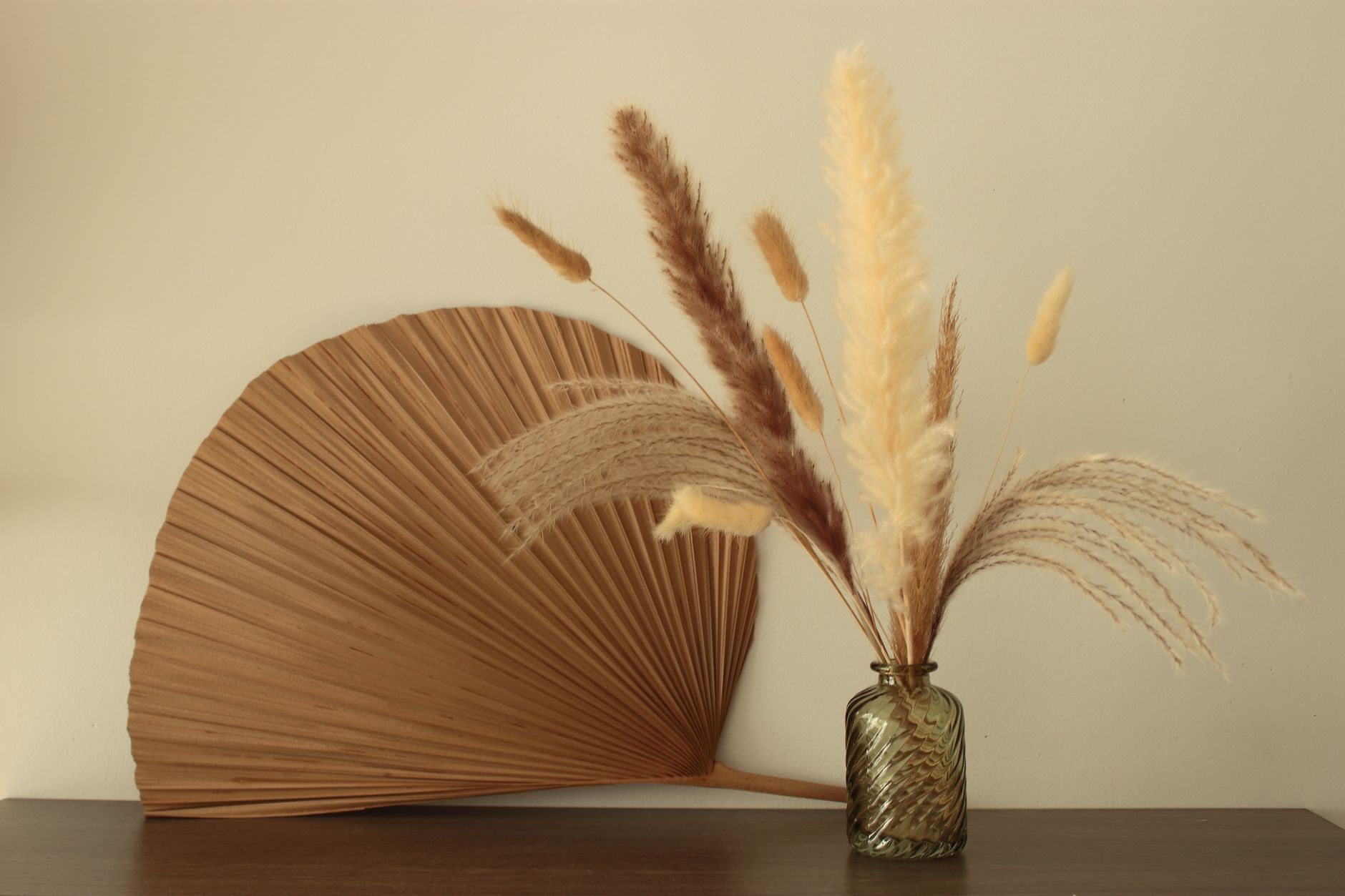
Somewhere around 2020, dried flowers went from “dusty arrangement your grandmother had on the hall table since 1987” to “chic, sustainable, Instagram-worthy home décor that influencers arrange in ceramic vases next to their coffee table books.” The aesthetic shifted. The prices shifted too — upward, dramatically.
Now there is an entire category of floral products marketed as “everlasting,” “forever,” “preserved,” and “eternal” bouquets. They show up on Etsy, in boutique shops, and in your social media feed with promises that you will never need to buy flowers again. Some of them cost more than fresh arrangements. Some of them cost much more.
We are a florist that works primarily with fresh flowers. We have opinions. But we also have respect for good dried and preserved work when it is done well. So here is the honest breakdown — what these products actually are, when they make sense, and when you are better off with the real thing.
🌾 Dried Flowers: The Original
What they are: Fresh flowers that have been dehydrated, either by hanging upside down in a warm, dry space (the traditional method) or by using a desiccant like silica gel (faster, preserves more shape and color). The water is removed from the cells, and what remains is the structural tissue — lighter, stiffer, more fragile, and significantly less colorful than the fresh version.
What dries well: Not everything survives the process. The best candidates are flowers with naturally low moisture content and sturdy structures:
- Lavender — the gold standard of dried flowers. Retains color and scent beautifully.
- Statice — those papery purple, pink, and white clusters that are practically dry while still alive.
- Strawflower (Helichrysum) — bred for drying. The petals are naturally stiff and colorful.
- Baby’s breath — dries quickly and holds its shape. The backbone of most dried arrangements.
- Eucalyptus — retains scent and color when air-dried. Becomes more muted but still beautiful.
- Pampas grass — the poster child of the dried flower revival. Fluffy, dramatic, and essentially immortal once dried.
- Globe thistle, craspedia (billy balls), lotus pods, bunny tails — all dry well and add texture.
What does NOT dry well: Most of the flowers people actually love in fresh arrangements. Roses lose their color and go brown. Lilies collapse. Tulips shrivel into unrecognizable ribbons. Hydrangeas can work if caught at exactly the right stage but fail unpredictably. Peonies are a gamble. Sunflowers lose their petals and leave a sad, dark disc.
How long they last: A well-made dried arrangement in a dry, low-humidity environment can last 1–3 years before becoming noticeably faded, dusty, or brittle. In a humid bathroom or a sunny window, much less. They do not last forever. “Forever” is a marketing word.
Cost: Dried flower arrangements range from $30–$40 for a simple bundle to $100–$200+ for a designed piece. The per-stem cost is often higher than fresh because the drying process adds labor, reduces yield (not every stem survives), and the varieties that dry well are sometimes specialty crops.
💎 Preserved Flowers: The Fancy Version
What they are: Fresh flowers that have been treated with a glycerin-based solution that replaces the water in the cells, keeping the flower soft, pliable, and close to its original appearance. The process also typically involves dyes to restore or enhance color, since the natural pigments often fade during treatment.
Preserved flowers are not the same as dried flowers. A dried rose is stiff, faded, and fragile. A preserved rose feels soft, looks nearly fresh, and holds its shape and color for much longer. The difference in quality is significant — and so is the price.
What preserves well:
- Roses — by far the most commonly preserved flower. The thick petals hold glycerin well and the round shape is forgiving. Preserved roses in acrylic boxes are a major gift category.
- Hydrangeas — the large, flat florets take preservation beautifully. Preserved hydrangea is one of the best products in this category.
- Eucalyptus and greenery — preserves well and retains flexibility. Used in wreaths and garlands.
- Peonies, ranunculus, garden roses — can be preserved but are more expensive due to the cost of the fresh stems and the delicacy of the process.
How long they last: A preserved flower arrangement, properly cared for, can last 1–5 years depending on the environment. Keep them out of direct sunlight (UV fades the dyes), away from high humidity (which can cause the glycerin to weep), and do not water them (this is the most common mistake — they are not alive). In ideal conditions, preserved roses can look nearly fresh for 2–3 years.
Cost: Preserved flower arrangements start at $60–$80 for a small piece and can run $200–$500+ for a large arrangement or a boxed rose display. Preserved roses sold individually (in acrylic cubes or hat boxes) run $30–$80 per stem. This is significantly more expensive than fresh flowers for a comparable visual impact.
💰 The Price Paradox
Here is the thing that surprises most people: dried and preserved flowers often cost more than fresh ones. A beautiful fresh arrangement of roses, lilies, and seasonal flowers might run $75–$100 and last 7–10 days. A comparable preserved arrangement might run $150–$250 and last 2–3 years.
On a per-day basis, the preserved arrangement is cheaper. On an upfront basis, it is significantly more expensive. And the emotional impact is different — fresh flowers have a vibrancy, a scent, and a presence that preserved flowers simply cannot replicate. A preserved rose looks like a rose. A fresh rose is a rose.
The pricing of fresh flowers reflects a perishable product with a complex supply chain. The pricing of preserved flowers reflects a processed product with a different kind of labor — the preservation itself, the re-dyeing, the careful handling of fragile treated stems, and the packaging.
✅ When Dried or Preserved Flowers Make Sense
- Home décor that you do not want to replace weekly. If you want something beautiful on a shelf or mantle that stays put for a year, dried or preserved is the practical choice.
- Weddings and events where you want to prep in advance. Dried flower bouquets and centerpieces can be made weeks or months before the event with zero freshness anxiety.
- Memorial keepsakes. Preserving flowers from a funeral, a wedding bouquet, or a meaningful arrangement is a legitimate and beautiful way to hold onto a moment. This is one of the best uses of preservation.
- Gifts for people who cannot care for fresh flowers. Someone who travels constantly, lives in a dorm, or simply forgets to water anything — a preserved arrangement is genuinely more useful.
- Allergy-sensitive environments. Dried and preserved flowers produce no pollen (it is removed or neutralized during processing). Safe for allergy sufferers.
- Spaces with no natural light. Fresh flowers need indirect light to maintain. Preserved flowers do not care. An interior office or a windowless bathroom is fine.
❌ When Fresh Is Still Better
- Sending a gift. The emotional impact of receiving fresh flowers — the color, the fragrance, the knowledge that someone thought of you today — is something preserved flowers cannot match. A preserved rose in a box is a nice object. A fresh arrangement delivered to your door is an experience.
- Sympathy and condolence. Fresh flowers are the language of sympathy. Sending a preserved arrangement for a loss would feel oddly permanent — like asking someone to display their grief on a shelf.
- Romance. A dozen fresh roses says “I am thinking about you right now.” A preserved rose in a box says “I purchased this at some point.” The ephemerality of fresh flowers is part of their romantic power — they are a gift of the moment, not a product with a shelf life.
- Scent. Fresh flowers smell like flowers. Dried flowers smell like dust or nothing. Preserved flowers smell like nothing or faintly chemical. If fragrance matters, fresh wins completely.
- Supporting your local florist. Fresh flower arrangements are designed by hand, that day, by a person who chose each stem. It is a craft product. Preserved arrangements are often mass-produced in factories (many in China or Southeast Asia) and sold online. If you care about supporting local businesses and handmade work, fresh is the way.
💡 The Sustainability Question
Dried and preserved flowers are often marketed as the “sustainable” choice. The argument: they last longer, so you buy less, which means less waste and fewer carbon-intensive flower shipments.
There is some truth to that. But the full picture is more complicated:
- The glycerin preservation process uses chemicals, energy, and produces waste. It is not a zero-impact process.
- Many preserved flowers are manufactured overseas and shipped long distances — the same carbon-intensive logistics they claim to avoid.
- Preserved flowers often include dyes (including some that are not biodegradable), plastic packaging, and acrylic display cases that are not recyclable.
- Fresh flowers, when they are done, can be composted. Preserved flowers cannot — the glycerin and dyes make them unsuitable for compost.
Neither option is perfectly sustainable. Fresh flowers have a larger per-delivery footprint but are fully compostable. Preserved flowers have a smaller per-year footprint but create non-compostable waste. The “sustainable” marketing around preserved flowers is not wrong, but it is not the whole story.
🎨 The Aesthetic Difference
Dried flowers have a specific look: muted, earthy, warm-toned, textural. Think terracotta, sand, dusty pink, sage, and wheat. It is a beautiful aesthetic — but it is one aesthetic. If you want bright, saturated color — vivid reds, electric pinks, deep purples, sunshine yellows — dried flowers cannot deliver it. The drying process mutes everything.
Preserved flowers get closer to fresh color because of the re-dyeing process, but the palette is still limited and the colors can look slightly “off” — a preserved red rose is a different red than a fresh one. It is saturated in a flat, uniform way that lacks the natural variation of a living petal.
Fresh flowers have the full spectrum. Every color, every shade, every seasonal variation. A fresh peony in late May has a color and a depth that no preserved product can replicate. A fresh sunflower has a warmth that dried sunflowers (which tend to look like sad leather frisbees) cannot approach.
🥀 The Honest Summary
Dried and preserved flowers are a legitimate, beautiful product category that serves real purposes — home décor, event planning, keepsakes, and low-maintenance beauty. They are not a gimmick. Good dried and preserved work is genuinely artful.
But they are not a replacement for fresh flowers. They are a different thing entirely. Comparing a preserved rose to a fresh rose is like comparing a photograph to the person in it — the photograph is valuable, but it is not the same experience.
If you want beauty that lasts on a shelf, buy preserved. If you want beauty that makes someone’s day, send fresh. If you want both, do both. We will not judge. (We will silently note that you ordered the fresh ones from us, and we will appreciate it.)
Browse our arrangements, plants, and gifts. Same-day delivery. Alive, fragrant, and unapologetically temporary. 🥀