
Garden Girl Flowers is a fellow Eugene florist. They are good at what they do. They grow locally. They deliver around Eugene-Springfield. And they have a blog post about fresh flower care that gives solid, straightforward advice.
We read it. We mostly agree. But we have been doing this long enough to have opinions, and some of their tips deserve expansion, context, and — in one case — a respectful counter-argument. Here is our take.
✅ Where We Completely Agree
Garden Girl says: “The most important thing you can do is keep the water clean.”
Yes. Absolutely. This is the number one thing. Dirty water breeds bacteria. Bacteria clogs stems. Clogged stems cannot drink. Flowers that cannot drink die early. Every other tip is secondary to this one.
They recommend changing water every other day. We would go further: change it every day if you can. Every other day is the minimum. Daily is better. And when you change it, do not just top it off — dump the old water completely, rinse the vase (that slimy film on the glass is bacterial biofilm), and refill with fresh cool water.
The “hold the stems and run water over them until clear” technique they describe works perfectly. We do the same thing.
Garden Girl says: “Keep away from warm drafts, fireplaces, electronics, or direct sun from a window.”
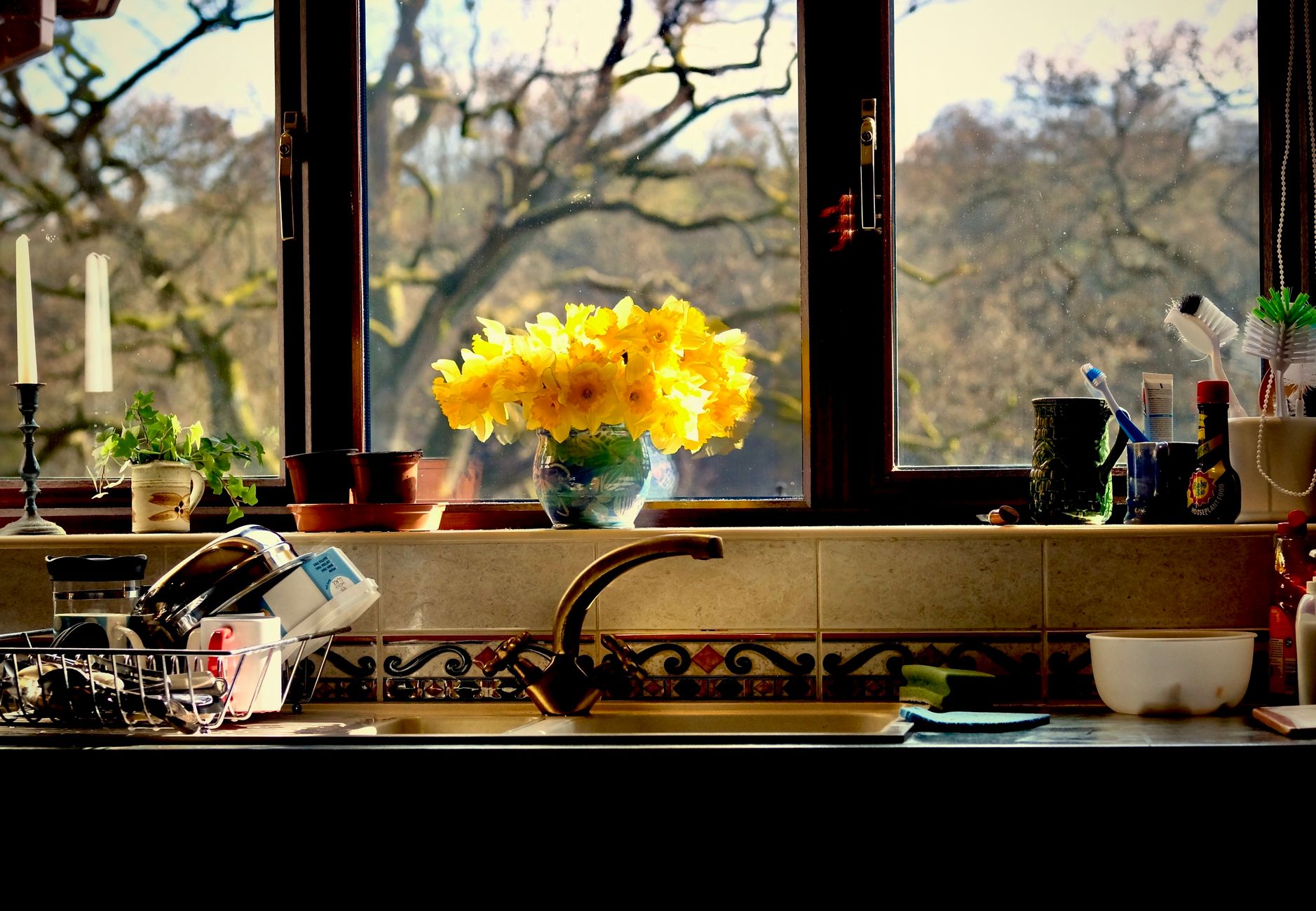
Correct. Heat accelerates the metabolic rate of cut flowers. They open faster, dehydrate faster, and fade faster. A bouquet on a sunny windowsill will last 3 days. The same bouquet in a cool corner will last 7. This is not a small difference — it is double the life.
We would add: air conditioning vents are just as bad as heat vents. The forced dry air dehydrates petals even if the temperature is cool. Keep arrangements away from any vent — hot or cold.
Garden Girl says: “Keep them away from fruit and vegetables — these release toxic gases that kill flowers.”
This sounds like an old wives’ tale. It is not. It is real chemistry. Ripening fruit (especially bananas, apples, and avocados) releases ethylene gas. Ethylene is a plant hormone that triggers aging and senescence in cut flowers. A banana on the counter next to your bouquet will shorten its life by 1–2 days. This is well-documented, reproducible science.
Most people think this is made up when they hear it. It is not. Move the fruit bowl.
💡 What We’d Add
Garden Girl’s tips are good but brief. Here is what we think is missing:
- Re-cut the stems every 2–3 days. When you change the water, trim a half-inch off the bottom of each stem at a 45-degree angle. The cut end seals over time (like a scab forming). A fresh cut reopens the water channels. This single step adds 2–3 days of vase life. We think this is as important as clean water and it is almost never mentioned in basic care guides.
- Use the flower food packet. That little sachet your florist includes is not decorative. It contains three things: sugar (energy for the flowers), an acidifier (lowers water pH for better uptake), and a biocide (kills bacteria). All three work together. Use it. If you run out after a water change, a drop of bleach (literally one drop per quart) plus a pinch of sugar replicates it imperfectly but helpfully.
- Remove leaves below the waterline. Any foliage submerged in the vase water will rot within 48 hours and become a bacteria factory. Strip all leaves that would sit below the water level before arranging. This is something we do automatically in the shop — if you rearrange at home, check for submerged leaves.
- Different flowers have different lifespans. Not everything in your arrangement will last the same number of days. Roses might go 7–10 days. Tulips 5–7. Hydrangeas sometimes 4 (or 14 — they are unpredictable). Remove individual stems as they fade rather than throwing away the whole arrangement. What remains often looks beautiful for another 3–4 days.
- Temperature of the water matters. Cool water (not cold, not warm) is best for most cut flowers. The exception: woody stems (lilac, hydrangea, flowering branches) benefit from warm water initially because it moves up the stem faster through the dense fibers. After the first hour, switch to cool.
🤔 The Garage-Cooler Trick (Where We Partially Disagree)
Garden Girl says: “You can place some flowers in a cool garage or outside on a covered patio … it will be like a florist cooler.”
This is … partially true. The principle is sound: cooler temperatures slow metabolism and extend life. A professional floral cooler runs at 34–38°F with controlled humidity. A garage in Eugene in June is probably 55–65°F overnight. That IS cooler than your 72°F living room, and it WILL help.
But here is where we gently push back: most garages have wildly inconsistent conditions. Temperature swings. Fumes from a car or lawn equipment (ethylene from exhaust is the same problem as fruit). Insects. And critically — no humidity control. A garage is dry. Flowers in dry air lose moisture through their petals even if the stems are in water.
Our actual recommendation: if your house is warm (above 72°F), move your flowers to the coolest room in the house overnight — often a bathroom, a north-facing room, or a basement. This gives you the temperature benefit without the fumes, bugs, and dryness of a garage. If your only cool option truly is the garage, it works — but cover the arrangement loosely with a plastic bag to retain humidity, and make sure there is no running car or gas-powered equipment nearby.
The “bring them back in the morning to enjoy” part is perfect advice though. Cool at night, display during the day. That rhythm mimics what happens in nature and in our cooler.
📊 The Numbers (Because We Are Nerds)
How much does each tip actually matter? Here is our rough estimate based on years of testing:
- Clean water daily: +2–3 days over stagnant water
- Re-cutting stems: +2–3 days over sealed stems
- Flower food: +1–2 days over plain water
- Cool location: +2–4 days over warm location
- Away from fruit: +1–2 days over next-to-bananas
- Removing dead stems: +1–2 days for remaining flowers
Combined? A well-cared-for arrangement can last 10–14 days. A neglected one in a warm room with dirty water and a fruit bowl nearby? Three to four days. Same flowers. Completely different outcome.
🌺 The Bigger Point
We like that Garden Girl Flowers writes about flower care. We like that another Eugene florist is educating people. The more informed flower buyers are, the happier they are with their purchases — from any florist. A customer who takes care of their flowers gets 10 days of joy instead of 4. That is good for them and good for the industry.
We just think there is more to say. Flower care is not five bullet points — it is a set of habits that, once you learn them, become automatic. And the payoff is enormous: double or triple the life of every bouquet you ever buy.
For our complete deep dive, read our full flower care guide. For the science of why some flowers last longer than others regardless of care, read why vase life varies so much. And for what is in season right now (seasonal flowers last longer because they are fresher) — check the seasonal guide.
Browse our arrangements — every bouquet leaves the shop with stems freshly cut, leaves stripped, flower food included, and care instructions on the card. Same-day delivery across Eugene and Springfield.