
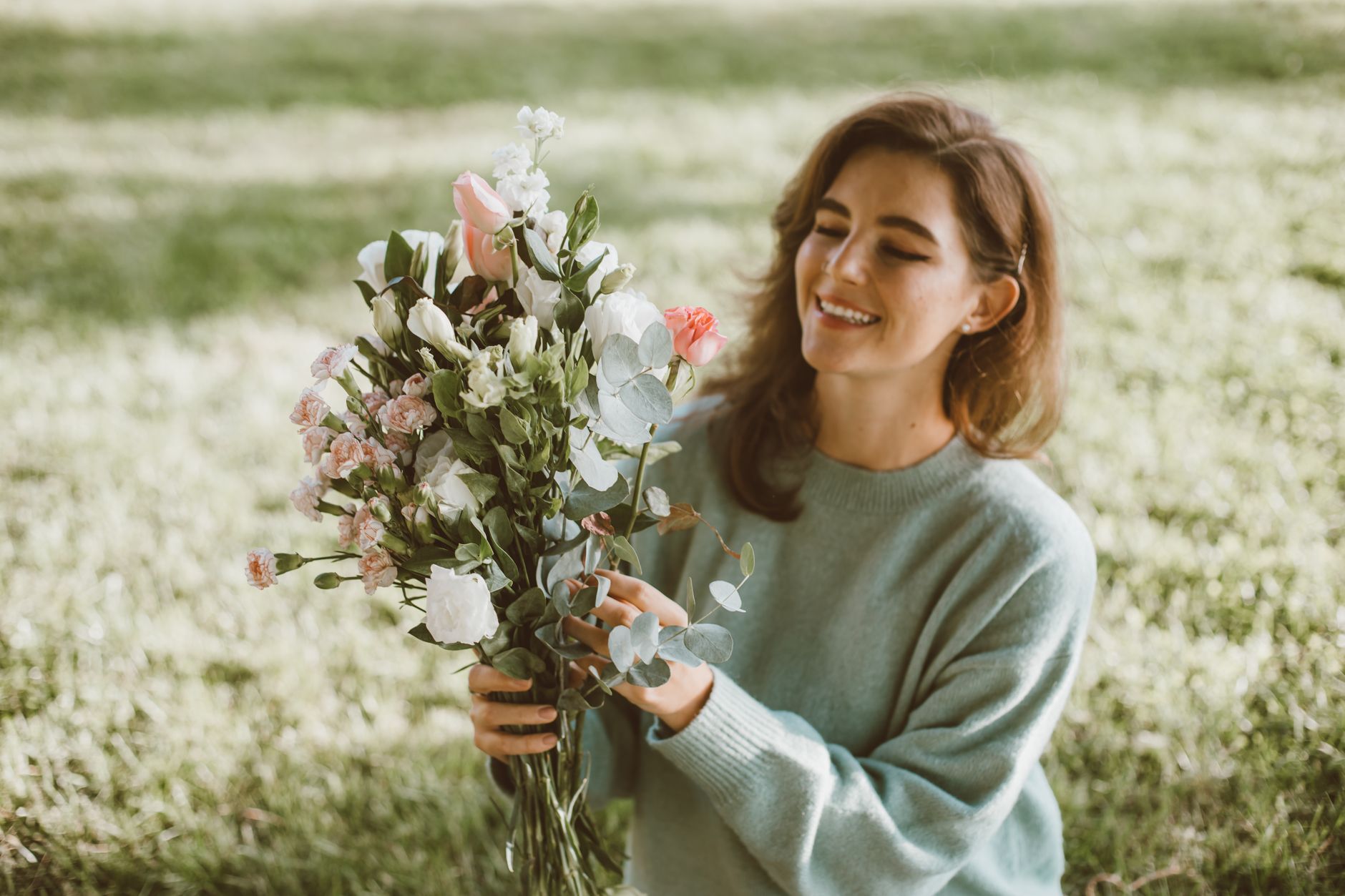
Everyone knows flowers make people smile. Hand someone a bouquet and watch: the shoulders drop, the face softens, something shifts. It happens so reliably and so universally that we barely think about why it happens. We just accept it as one of those pleasant facts about being human, like yawning being contagious or puppies being impossible to ignore.
But the why is genuinely fascinating. Over the past two decades, researchers in psychology, neuroscience, evolutionary biology, and behavioral economics have studied what flowers do to the human brain — and the results go far beyond “they look nice.” Flowers trigger measurable neurochemical changes, tap into deep evolutionary wiring, exploit the way our visual and olfactory systems process the world, and produce emotional effects that other gifts — including more expensive ones — consistently fail to match.
Here is what the science actually says about why flowers make people happy.
🧪 The Rutgers Studies: Flowers Produce a “True Smile”
The most widely cited research on flowers and happiness comes from a series of studies conducted at Rutgers University by evolutionary psychologist Dr. Jeannette Haviland-Jones and her colleagues, published in the journal Evolutionary Psychology. The research included three experiments:
- Experiment 1 (the doorway study): Participants received one of three gifts at their front door — flowers, a fruit basket, or a candle. Every single person who received flowers displayed a Duchenne smile (a “true” smile involving both the mouth and the eyes, which is difficult to fake). The fruit basket and candle produced polite smiles but not universal Duchenne smiles. Flowers were the only gift that produced a genuine happiness response in 100% of recipients.
- Experiment 2 (the elevator study): A researcher gave participants a flower, a pen, or nothing during an elevator ride. Those who received the flower were significantly more likely to initiate conversation, stand closer to the researcher, and display positive social behavior. Flowers increased prosocial engagement with a stranger in a confined space.
- Experiment 3 (the longitudinal study): Participants who received flowers and kept them in their homes for several days reported elevated mood not just on the day of delivery but over the following days. The flowers produced a sustained mood effect that outlasted the initial surprise.
The Rutgers team concluded that flowers are a “powerful positive emotion inducer” — and they hypothesized that this response is not accidental but the result of a long evolutionary relationship between humans and flowering plants.
🧬 The Evolutionary Argument: We Co-Evolved to Love Flowers
Dr. Haviland-Jones proposed a provocative idea: flowers may have evolved to exploit the human reward system — just as fruits evolved bright colors to attract animals who would eat them and disperse their seeds.
The logic runs like this:
- Early humans who noticed and remembered where flowers were blooming had a survival advantage. Flowers signal the presence of fruit to come, clean water, fertile soil, and seasonal timing cues critical to foraging and agriculture.
- Over tens of thousands of years, humans who had a positive emotional response to flowers — who were drawn to them, remembered their locations, and cultivated them — were more successful at finding food and establishing settlements.
- Flowering plants, in turn, benefited from human attention, cultivation, and seed dispersal. The species that produced the most appealing colors, shapes, and scents were preferentially tended and propagated by humans.
The result is a co-evolutionary feedback loop: flowers evolved to be beautiful to us because being beautiful to us helped them survive, and we evolved to find them emotionally rewarding because noticing them helped us survive. We covered some of this 400-year breeding story in our flower origins article — the science of why we care is the deeper layer.
💡 Dopamine, Serotonin, and Oxytocin: The Neurochemistry of Receiving Flowers
When someone receives flowers, multiple neurochemical systems activate simultaneously:
- Dopamine — the “reward” neurotransmitter. Receiving an unexpected gift triggers a dopamine release in the brain’s reward centers (particularly the nucleus accumbens and the ventral tegmental area). Flowers are especially effective at this because they are almost always a surprise — people rarely buy themselves flowers, so receiving them carries a novelty signal that amplifies the dopamine response. This is the same neurotransmitter system involved in falling in love, eating chocolate, and hearing a favorite song.
- Serotonin — the “well-being” neurotransmitter. The bright, saturated colors of flowers — particularly yellows, oranges, and warm pinks — stimulate visual pathways that influence serotonin production. This is related to why bright light and warm colors improve mood (the same principle behind light therapy for seasonal affective disorder). A colorful bouquet on a gray day is doing something biochemically similar to sunshine.
- Oxytocin — the “connection” hormone. When flowers are received as a gift from another person, the act of giving triggers oxytocin release in both the giver and the receiver. This is the same hormone involved in bonding, trust, and social attachment. Flowers are not just a gift — they are a social signal that strengthens the relationship between two people.
The triple activation of dopamine (reward), serotonin (well-being), and oxytocin (connection) is relatively unusual for a single stimulus. Most gifts activate one or two of these systems. Flowers reliably activate all three, which is part of why the emotional response feels so disproportionately strong relative to the cost of the gift.
🌈 Color Theory: Why Certain Bouquets Hit Different
The colors of flowers are not arbitrary in their emotional impact. Color psychology research — drawing on work by Andrew Elliot and Markus Maier at the University of Rochester and others — shows that different colors activate different emotional and physiological responses:
- Red — increases heart rate and arousal. Associated with passion, urgency, and romantic intensity. Red roses work because the color itself triggers a mild physiological activation that reads as excitement. But red can also signal dominance, which is why a single red rose feels intimate while two dozen can feel overwhelming.
- Yellow — stimulates the production of serotonin and is associated with optimism, warmth, and cheerfulness. Yellow flowers (sunflowers, yellow roses, daffodils) produce a mood-lifting effect that is measurably different from cool-toned arrangements. This is why yellow bouquets are instinctively chosen for “cheer up” and “get well” occasions.
- Pink — has a calming effect, particularly softer pinks. Research by Alexander Schauss on “Baker-Miller Pink” showed that certain shades of pink reduce aggression and anxiety. Soft pink flowers (peonies, garden roses, ranunculus) create a feeling of gentleness and tenderness that deeper pinks and reds do not.
- Blue and purple — associated with calm, contemplation, and creative thought. Lavender, blue delphinium, and purple stock are perceived as “thoughtful” or “sophisticated” partly because cool tones lower physiological arousal and invite reflection rather than excitement.
- White — signals purity, simplicity, and peace. White flowers (lilies, hydrangeas, white roses) are the default for sympathy and remembrance because the color itself communicates stillness and quiet respect. We covered the etiquette of sympathy flowers — the color science is part of why those choices feel instinctively right.
- Mixed, multicolor arrangements — produce a “visual complexity” effect that engages the brain’s pattern-recognition systems. Multiple colors in a single arrangement hold attention longer, produce more visual exploration, and create a richer sensory experience than monochromatic displays.
👃 Scent and the Limbic System: Smell Goes Straight to Emotion
Of all the senses, smell has the most direct connection to the brain’s emotional center. Olfactory signals travel from the nose to the olfactory bulb, which connects directly to the amygdala (emotion processing) and the hippocampus (memory formation). No other sense has this direct pathway — visual and auditory signals are routed through the thalamus first, adding a layer of cognitive processing before the emotional response.
This means that the scent of flowers triggers emotional responses before your conscious mind even registers what it is smelling. The fragrance of roses, lilies, freesia, or lavender can produce a mood shift, a memory retrieval, or a feeling of comfort in milliseconds — faster than any visual stimulus.
Research published in Chemical Senses and Frontiers in Psychology has shown that:
- floral scents reduce cortisol (the stress hormone) and lower heart rate in laboratory settings
- lavender specifically has anxiolytic (anxiety-reducing) properties that are measurable on EEG and skin conductance
- rose scent activates reward circuits in the brain that overlap with those triggered by pleasant music and comfort food
- novel floral scents (unfamiliar or complex blends) produce higher engagement and curiosity responses than familiar scents
We wrote about the most fragrant flowers in arrangements and the least fragrant ones — the science explains why the fragrant ones create such a strong emotional response and why some florists specifically design arrangements for scent as well as visual impact.
🌲 Biophilia: Humans Are Wired to Respond to Living Things
The biophilia hypothesis, proposed by biologist E.O. Wilson in 1984, suggests that humans have an innate, genetically determined affinity for living things and natural systems. We are drawn to plants, animals, water, and natural landscapes not because of cultural conditioning but because of millions of years of evolution in natural environments.
Flowers are one of the most potent biophilic stimuli because they combine multiple natural signals simultaneously:
- biological life — flowers are alive, and we unconsciously register this. A living flower produces a different response than an artificial one, even when the visual appearance is identical.
- color from natural pigments — the colors of flowers are produced by organic compounds (anthocyanins, carotenoids, betalains) that create a visual complexity and depth that synthetic dyes cannot fully replicate
- imperfection and variation — no two flowers are identical. This natural variation engages the brain’s pattern-recognition systems in a way that perfectly uniform artificial flowers do not.
- temporal change — flowers open, shift, and eventually fade. This lifecycle creates a sense of presence and impermanence that gives them emotional weight. A flower is beautiful partly because it will not last.
Research by Roger Ulrich at Texas A&M and others has shown that the presence of living plants and flowers in indoor environments reduces stress, improves concentration, increases pain tolerance, and accelerates recovery times in hospital patients. The effect is not purely decorative — it is physiological.
📊 The Behavioral Economics: Flowers Outperform More Expensive Gifts
One of the most counterintuitive findings in gift-giving research is that flowers consistently produce stronger emotional responses than gifts that cost significantly more.
Studies in behavioral economics and consumer psychology have found that:
- experiential and sensory gifts (flowers, food, music) produce stronger and more lasting positive emotions than material gifts (electronics, clothing, gift cards) at equivalent price points
- the “thought that counts” is real — gifts perceived as requiring personal thought and selection (choosing specific flowers, writing a card) activate stronger gratitude and social-bonding responses than gifts perceived as transactional (sending an Amazon card)
- surprise amplifies the effect — unexpected gifts produce a dopamine spike that expected gifts do not. Flowers are unusual among common gifts because they are almost never expected, which means they reliably trigger the surprise bonus.
- the display effect — flowers sit in the recipient’s home or office for days, providing repeated visual and olfactory exposure. Each time the recipient notices the flowers, they experience a micro-renewal of the positive emotion. A gift card, once redeemed, produces no further emotional signal.
This is why a $50 bouquet often produces a stronger and more lasting emotional response than a $100 gift card. The bouquet activates more sensory channels, carries more social meaning, provides a longer display period, and benefits from the surprise effect. We talked about unconventional reasons to send flowers — the behavioral economics research is why those “just because” flowers hit so hard.
🏥 The Clinical Evidence: Flowers in Hospitals
Some of the most compelling evidence for the mood-altering effects of flowers comes from hospital studies. Research published in the Journal of the American Society for Horticultural Science found that surgical patients whose rooms contained flowers and plants:
- reported lower pain levels on self-assessment scales
- required fewer pain medications
- had lower blood pressure and heart rate
- reported less anxiety and fatigue
- rated their rooms and their overall hospital experience more positively
The researchers controlled for other variables and concluded that the flowers and plants were responsible for the measurable improvements. This is consistent with the broader biophilia research and with Ulrich’s earlier work on natural views and recovery rates.
It is worth noting: many hospitals have policies about flowers in certain units (ICUs, allergy-sensitive wards), and we always recommend checking before sending. But in standard patient rooms, the research strongly supports what people have intuitively known for centuries — flowers help.
🧘 The Duration Effect: Why Flowers Keep Working After Day One
Unlike most gifts, which produce a single moment of happiness at the time of opening, flowers produce a multi-day emotional curve:
- Day 1: Surprise, delight, dopamine spike, social connection (thanking the sender)
- Days 2–4: Repeated visual and olfactory exposure as the recipient walks past the arrangement. Each encounter triggers a micro-dose of the original positive response. The flowers also serve as a visible reminder of the relationship with the sender.
- Days 5–7: The flowers begin to change — some blooms open further, others start to fade. This natural lifecycle creates a sense of preciousness and transience that deepens the emotional meaning. The beauty is real partly because it is temporary.
- After the flowers are gone: Many recipients report a brief feeling of loss when flowers are finally discarded, followed by a positive memory of the gesture. This emotional imprint is stronger than what most material gifts produce.
The multi-day duration effect is one reason flowers have persisted as a gift for thousands of years despite being “impractical.” Their impracticality — you cannot wear them, deposit them, or store them — is actually a feature. It signals that the gift is purely about making someone feel something, with no transactional purpose. That purity of intent is part of what makes flowers emotionally powerful.
✨ Putting It All Together
When you send someone flowers, here is what the science says is actually happening:
- The surprise triggers a dopamine spike in the reward system
- The bright colors stimulate serotonin pathways and engage visual attention
- The scent goes directly to the emotional and memory centers of the brain, bypassing conscious processing
- The social gesture (gift from another person) activates oxytocin and strengthens the relational bond
- The biophilic response to a living, imperfect, temporary natural object creates a sense of presence and connection to the living world
- The multi-day display provides repeated emotional reinforcement that extends the effect far beyond the moment of delivery
- The impracticality of the gift signals pure intent, which amplifies the gratitude response
All of this happens unconsciously, automatically, and universally. It happens to extroverts and introverts, to people who “like” flowers and people who claim they don’t. It happens across cultures, age groups, and genders. The Rutgers studies found no significant demographic variation in the positive emotional response to receiving flowers. Everyone smiles. Every single time.
That is not a coincidence, and it is not just cultural conditioning. It is the result of a relationship between humans and flowering plants that stretches back tens of thousands of years — a relationship in which both species learned, slowly and without conscious intent, to make each other happier.
Which, when you think about it, is a pretty extraordinary thing for a bouquet to be carrying. 🧠🌸💐